- Custom 3D Printed Lamp: Miami Design, Prototyping & Small-Batch Production
- Bring a Custom 3D Printed Lamp Idea to Life in Miami
- Featured Concept: The Mesmerizing ZigZag Light
- Custom 3D Printed Lamp Options for Homes, Offices & Studios
- Material Selection for a Decorative 3D Printed Light
- LED-Ready Lamp Design: Heat, Diffusion & Component Fit
- From Sketch to Small-Batch 3D Printed Lamps
- Miami Portfolio Ideas: ZigZag Lamps & Custom Decorative Lighting
- Why Work With Custom3Dmodel for Custom Decorative Lighting in Miami
- What Affects Custom 3D Printed Lamp Pricing?
- Frequently Asked Questions About Custom 3D Printed Lamps
- Can a 3D printed lamp be functional?
- What is the best filament for a 3D printed lamp shade?
- Can Custom3Dmodel create a lamp from my sketch, photo, or existing file?
- Can I order a prototype or a small batch of custom lamps?
- How long does custom lamp production take?
- Request a Custom 3D Printed Lamp Quote in Miami
- Popular Custom 3D Printed Lamp Designs for Miami Homes
- Resources & Useful Links
Custom 3D Printed Lamp: Miami Design, Prototyping & Small-Batch Production
A custom 3D printed lamp gives homeowners, interior designers, product developers, and creative businesses a practical way to combine sculptural décor with low-heat ambient LED lighting. Custom3Dmodel helps clients in Miami and South Florida move from an early idea to a modeled, printed, and prototype-tested lamp housing or small production run.
Our work can include custom lamp modeling, file review, FDM print production, material sampling, LED-component fit checks, and revisions before a decorative light moves into small-batch manufacturing. The Mesmerizing ZigZag Light described below is an illustrative handcrafted lighting concept rather than a guaranteed standardized retail item; its form, texture, dimensions, colors, and component layout can be adapted for a specific project.
Bring a Custom 3D Printed Lamp Idea to Life in Miami
Whether you need personalized home décor, a compact bedside accent, an office desk light, a studio prop, or an early lighting-product prototype, Custom3Dmodel can evaluate the idea as a manufacturable object rather than only a visual concept. Clients can bring a hand sketch, inspiration image, product photo, existing STL, OBJ, STEP, or CAD file. We review the intended size, light source, assembly method, visual finish, and use environment before selecting a printing approach.
For clients comparing custom table lamp 3D printing Miami providers, local collaboration can simplify the development process. A Miami consultation makes it easier to review physical material samples, compare opaque and translucent surfaces, inspect prototype proportions, and identify issues such as a poorly positioned switch opening or a base that needs more stability. Our custom 3D printing services for prototypes and production parts support decorative projects as well as functional product-development work.
As a 3D printing service Miami Florida clients can use for iterative development, Custom3Dmodel approaches custom decorative lighting Miami projects with production realities in mind. A dramatic render may look excellent, but it still needs printable wall thicknesses, support-aware geometry, sensible cable routing, accessible assembly features, and a material that suits the expected light and temperature conditions.
Featured Concept: The Mesmerizing ZigZag Light
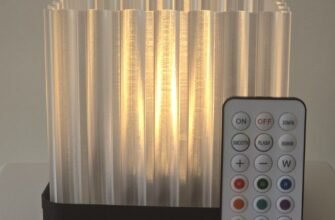
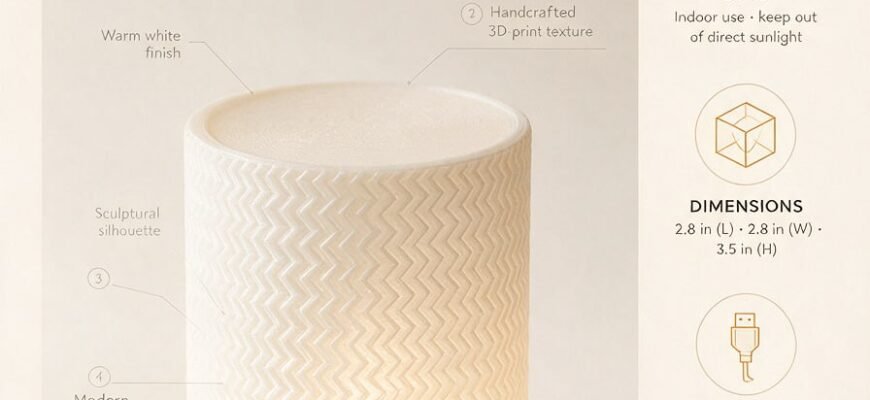
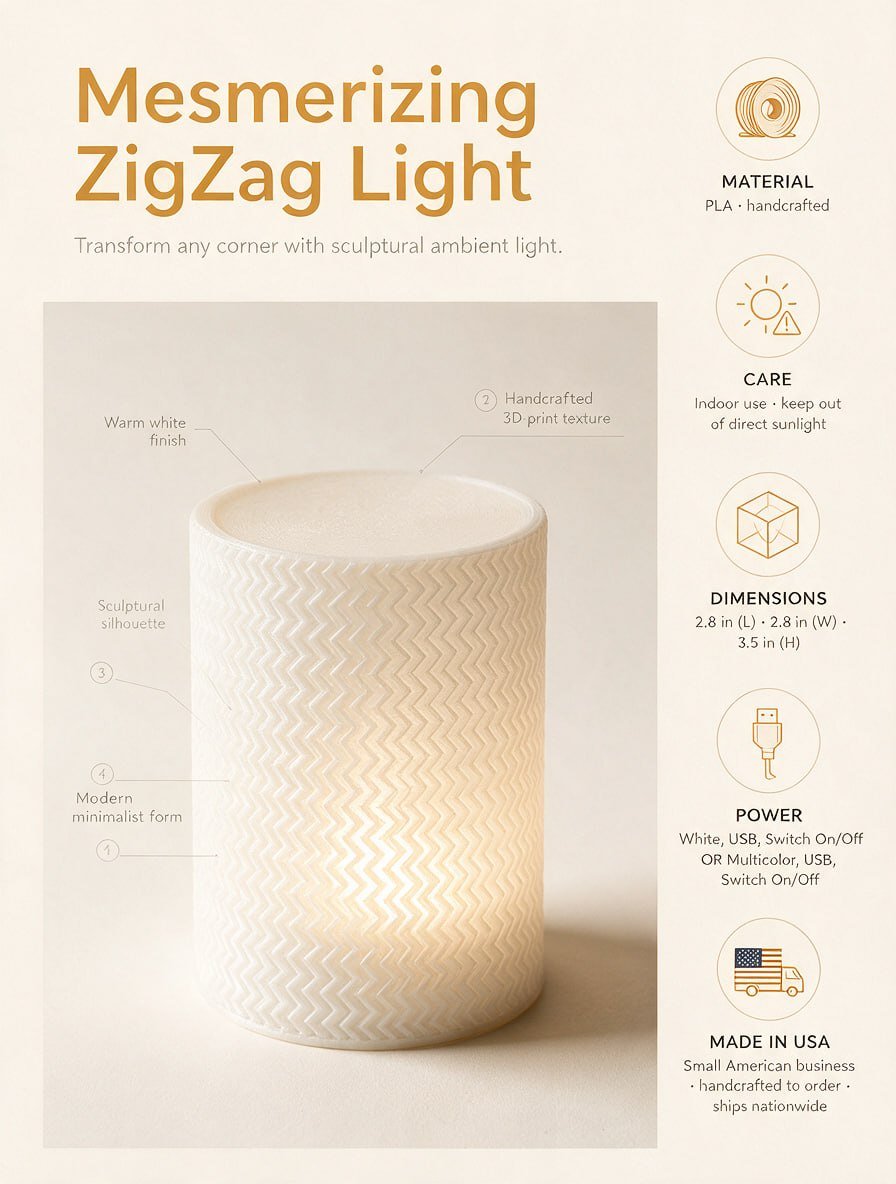
The Mesmerizing ZigZag Light is a compact cylindrical lamp concept built around a repeating zigzag 3D print texture. At approximately 2.8 x 2.8 x 3.5 inches, it is sized as a subtle tabletop accent for a nightstand, shelf, desk, reception counter, or creative studio setup. The example uses PLA construction, USB power, a simple on/off switch, and either white or multicolor LED settings.
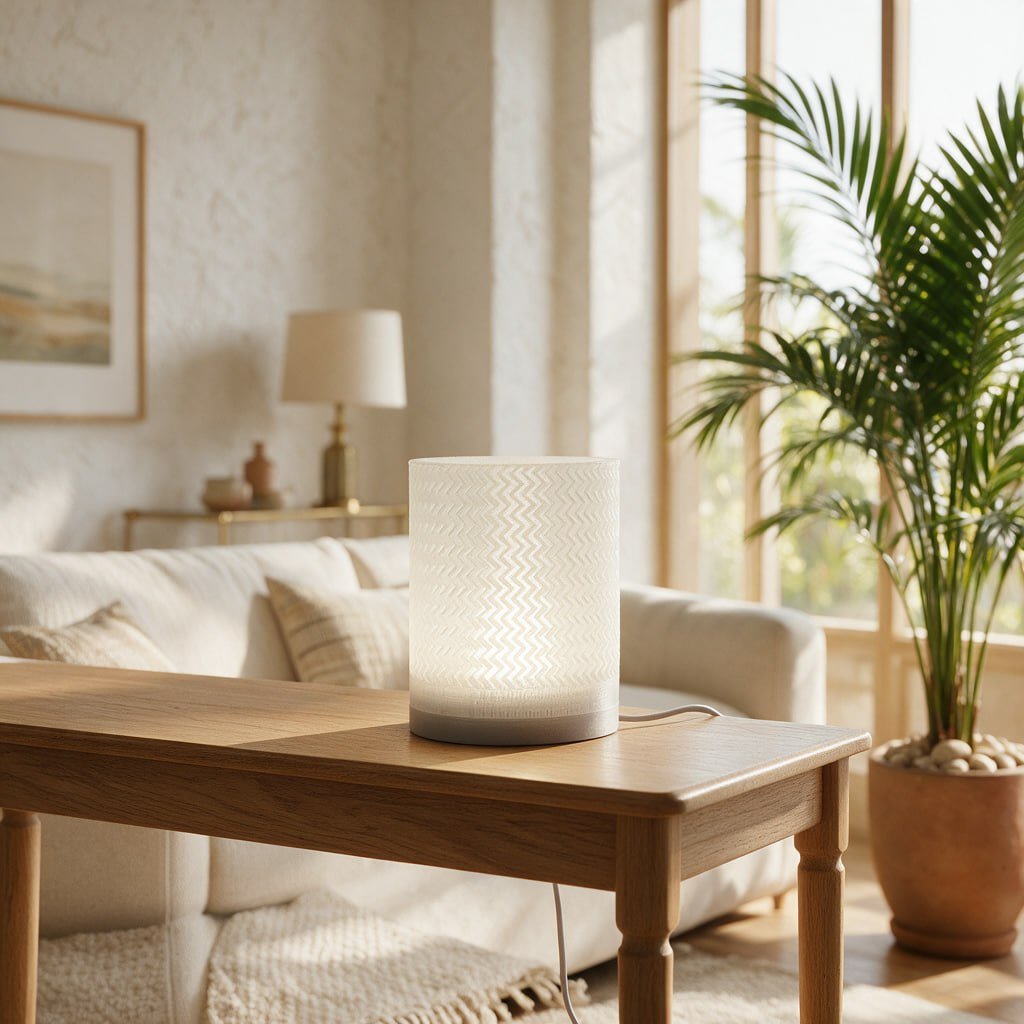
In daylight, the patterned exterior creates a sculptural silhouette and visible layered texture typical of an intentionally designed FDM surface. Once illuminated, the zigzag geometry adds shadows and highlights that give the decorative 3D printed light more depth than a smooth cylinder. The exterior pattern is only part of the lighting result; the wall thickness, material translucency, internal clearance, and LED position determine how much light passes through and how evenly it spreads.
A custom 3D printed lamp based on this concept can be resized, given a different exterior pattern, fitted with a personalized base, or adapted with a logo, name, monogram, or brand mark. Custom3Dmodel can also explore alternate proportions, diffuser arrangements, cable exits, color combinations, and LED compartment layouts while keeping the design focused on indoor decorative use.
Custom 3D Printed Lamp Options for Homes, Offices & Studios
Custom lighting does not have to begin with a full-size floor lamp. Compact 3D printed table lamp concepts are often more practical for apartment dwellers, renters, office users, and event teams because USB LED ambient lamps do not require permanent installation. Common Miami-area uses include bedside décor, desktop ambient lights, entryway pieces, office reception accents, themed event props, retail displays, and presentation models for new lighting products.
Design variables can include a cylindrical, geometric, faceted, or organic form; lamp height and diameter; zigzag, lattice, wave, or custom texture; diffuser thickness; surface color; branding; and the internal compartment for an LED module. A 3D printed bedside lamp may prioritize a warm, low-glare glow, while a creative studio piece may favor strong colored light, a more expressive texture, or a deliberately visible print-layer aesthetic.
For larger concepts, the lamp can be designed as separate printed sections with alignment features rather than forcing one tall shell onto a single build plate. This helps with shipping, print orientation, serviceability, and repeatable assembly. A custom ambient light should be designed around the actual components it will hold, not around assumed dimensions from an online listing.
Material Selection for a Decorative 3D Printed Light
Opaque PLA is useful when the lamp body needs to hide internal wires, LED boards, switches, or uneven light hotspots. It can create a clean, graphic outer shell and direct light through deliberately placed openings. For the ZigZag Light, opaque PLA can emphasize the textured form in daylight while limiting illumination to the pattern openings or a separate diffuser area.
A translucent PLA lamp shade or translucent lamp body is often the better starting point when the goal is a softer all-over glow from a low-heat LED module. Translucent filament does not behave exactly like frosted glass: print orientation, wall count, layer height, pigment, infill strategy, and the distance between the LED and shell all affect diffusion. A thin shell may reveal individual LEDs or bright hotspots, while a thicker or double-wall geometry can soften the output but reduce brightness.
PETG lamp shade material may be evaluated when a project needs greater impact resistance or better tolerance for warmer indoor conditions. PETG can be a sensible alternative for pieces that may receive more handling, but it still requires a complete design review because a lamp’s actual temperature depends on the enclosure, LED module, power arrangement, ventilation, and runtime. Surface finish also differs: PLA often produces crisp decorative detail, while PETG may need more tuning to preserve small features and reduce stringing around open textures.
PLA is generally appropriate for low-heat, indoor LED applications, including a PLA table lamp such as the featured compact concept. It is not the right default for traditional high-heat bulbs, prolonged direct South Florida sunlight, enclosed hot environments, or designs exposed to elevated temperatures. When those conditions are expected, Custom3Dmodel may recommend PETG, a different geometry, improved ventilation, or an alternative engineering decision based on the complete use case.
LED-Ready Lamp Design: Heat, Diffusion & Component Fit
Low-heat USB LED modules are generally preferred for decorative printed lamps because they simplify power access and reduce the thermal load on the printed housing compared with conventional hot bulb arrangements. That does not eliminate design responsibility. The LED module dimensions, wire bend radius, USB cable exit, switch position, internal clearance, and base assembly all need to be verified against the real component or a reliable dimensional specification.
During a prototype review, we look for practical failures that are easy to overlook in CAD: a switch cutout that is too tight after printing, a USB connector that cannot clear a wall, a cable opening with a sharp edge, insufficient room for an LED controller, or a narrow base that makes the lamp easy to tip. Wall thickness is also a balancing act. Thick walls improve rigidity and may diffuse light better, but increase print time, material use, and opacity. Thin walls can brighten the lamp but may flex, show hotspots, or expose internal forms.
A zigzag exterior can be visually expressive without being the primary diffuser. In many designs, the internal geometry, a translucent liner, a spacing chamber, or an indirect LED orientation does more to create even illumination than the outside pattern alone. A prototype is where these choices become visible under both white and multicolor modes rather than remaining assumptions in a render.
Custom3Dmodel provides 3D modeling, prototyping, and print-production support for lamp housings and decorative parts. Electrical engineering, electrical certification, retail electronics supply, wiring approval, and final product safety compliance are separate considerations unless specifically confirmed for a project. Heat management, wiring methods, electrical components, and applicable safety requirements must be assessed for each final lamp design by the appropriate qualified professionals.
From Sketch to Small-Batch 3D Printed Lamps
Our workflow begins with a project brief. Send a sketch, inspiration image, existing CAD or STL file, desired dimensions, preferred LED setup, material choice, color preferences, intended environment, finish expectations, and estimated quantity. For 3D modeling for lamps Miami clients need, that information establishes whether we are refining an existing design or building the lamp geometry from the ground up.
Next, Custom3Dmodel reviews printability and component fit. We select an appropriate material direction, define cable and switch access, establish wall thicknesses, and plan how the lamp will be assembled. For a 3D printed lighting prototype, we may print an early shell to test scale and texture before committing to a higher-finish sample. This is especially valuable when an attractive shape has a narrow footprint, complex overhangs, or a light path that needs tuning.
Prototype feedback can resolve wobble, insufficient wall thickness, poor diffusion, inaccessible switches, loose LED fit, and proportions that feel different in person than in a CAD render. Once the design is validated, Custom3Dmodel can discuss rapid prototyping for lighting products Miami businesses are developing and small batch lamp production Miami makers, designers, and brands may require. Repeatable files and documented assembly details matter when moving from one prototype to small batch 3D printed lamps.
Miami Portfolio Ideas: ZigZag Lamps & Custom Decorative Lighting
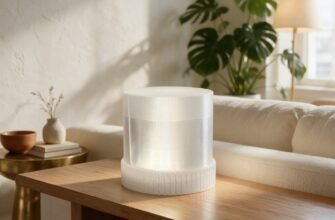
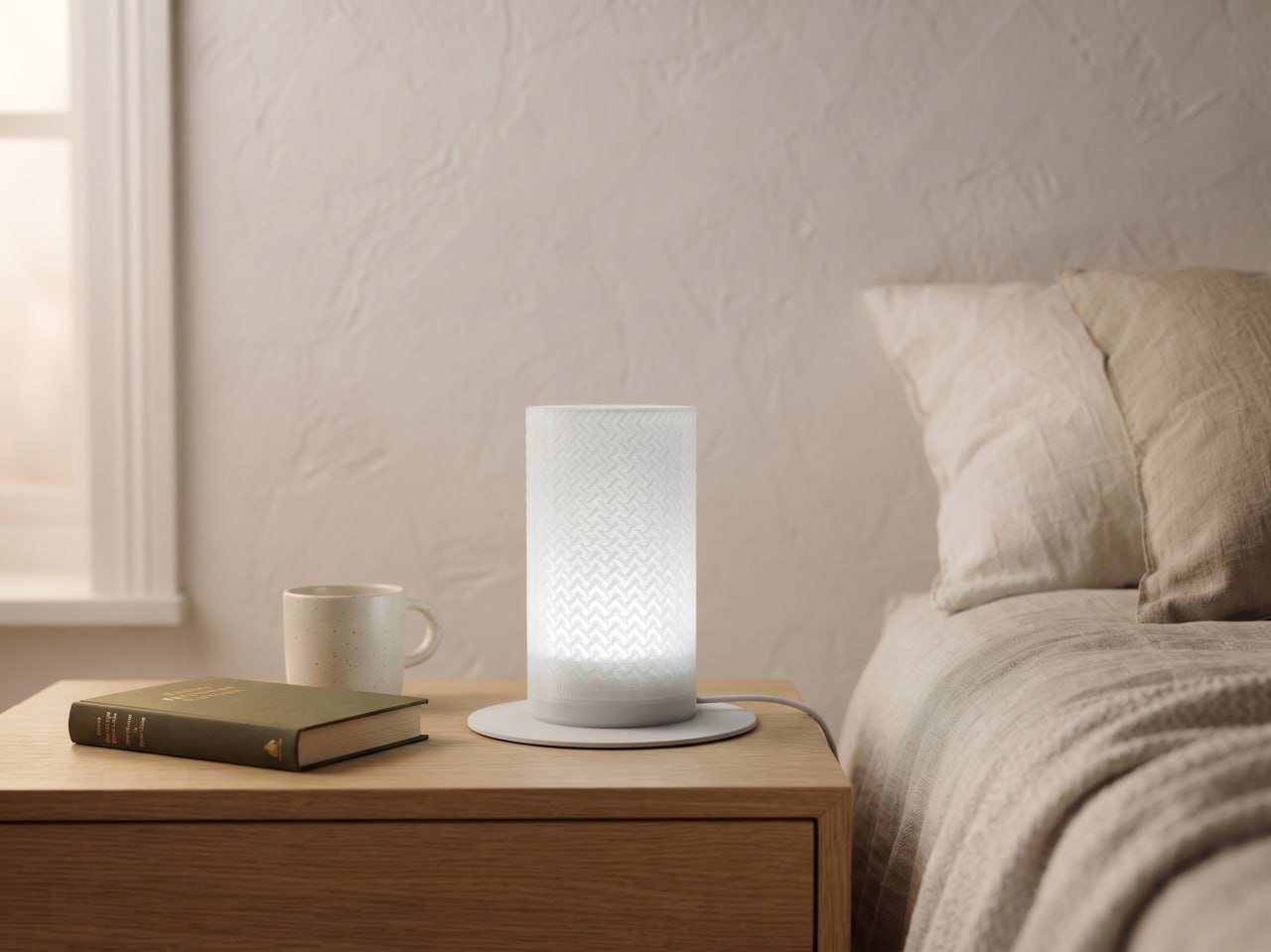
A strong custom decorative lighting Miami portfolio should show more than a final glamour image. For the ZigZag Light concept, useful gallery assets include a daylight render or photo showing the cylindrical silhouette, a bedside-table scene showing scale, a white LED illumination view, and a multicolor LED illumination view. Close-up images of the zigzag texture help clients understand the intentional FDM surface character.
Custom3Dmodel also recommends documenting concept sketches, CAD renders, print-progress photos, prototype iterations, base-fit tests, and material samples. These visual records are useful for home décor projects, office desk lighting, reception-area accents, creative studio installations, and lighting concept presentations. Any USA-made statement, client testimonial, project result, or case study should be supported by real production records and published only with appropriate permission.
Why Work With Custom3Dmodel for Custom Decorative Lighting in Miami
Custom3Dmodel combines practical custom 3D modeling, FDM production, prototype iteration, functional fit evaluation, decorative surface development, and small-batch manufacturing support. That combination matters for a lamp because the object must look considered, print reliably, accommodate real components, remain stable, and be repeatable if the project grows beyond a single display piece.
Working with a local Miami partner can make design revisions and material evaluation more direct. South Florida clients can discuss scale, inspect samples, review a prototype, and plan production details with a clearer understanding of the final object. For nationwide customers, project files, photos, dimensions, component specifications, and prototype feedback can also be managed remotely, with shipping discussed for eligible custom orders.
The ZigZag Light illustrates the decisions involved: a compact form factor, textured geometry, PLA construction for low-heat indoor use, USB LED compatibility, and transparent limitations around heat and electrical safety. A custom 3D printed lamp is most successful when the decorative goal and the manufacturing constraints are developed together, rather than treating the printed shell as an afterthought.
What Affects Custom 3D Printed Lamp Pricing?
Pricing depends on the lamp’s size, geometry complexity, print duration, material type, translucency requirements, wall thickness, finishing expectations, LED-component accommodation, modeling time, revision count, and quantity. A simple cylindrical shell using an existing production-ready STL typically requires less development than a new lamp product needing CAD modeling, multiple fit prototypes, diffuser experiments, and assembly documentation.
Small-batch pricing also depends on whether the design has been validated. Once a file, print orientation, material, and assembly method are established, repeat production is more predictable. However, each project should be quoted based on its actual requirements rather than a generic per-lamp estimate. To share dimensions, files, quantities, and project details, use our option for getting an instant 3D printing quote.
Frequently Asked Questions About Custom 3D Printed Lamps
These answers address common questions from Miami and South Florida customers comparing decorative lamp design, prototyping, and small-batch production options. For complex electrical, heat-management, or compliance questions, consult the appropriate qualified electrical professional for the final product requirements.
Can a 3D printed lamp be functional?
Yes. A printed lamp can be functional when the housing stability, internal clearances, component retention, LED setup, cable routing, and heat conditions are designed for its intended use. For decorative applications, low-heat USB LED modules are generally a more suitable starting point than high-heat bulb systems. The printed part should be prototype-tested with the actual planned components.
What is the best filament for a 3D printed lamp shade?
Translucent PLA can work well for an indoor decorative lamp that needs a soft LED glow, particularly when the shell thickness and LED spacing are designed for diffusion. PETG may be considered where added durability or warmer conditions are factors. The best material depends on desired light output, opacity, finish, structure, environment, and heat exposure; there is no one-filament answer for every lamp.
Can Custom3Dmodel create a lamp from my sketch, photo, or existing file?
Yes. You can submit a sketch, reference image, STL, OBJ, STEP file, or other available design information for review. Custom3Dmodel can support suitable projects with 3D modeling, file refinement, printability adjustments, and prototype development. Including overall dimensions and the LED component information helps make the review more accurate.
Can I order a prototype or a small batch of custom lamps?
Yes. A prototype-first approach lets you evaluate size, texture, material, light diffusion, base stability, and LED-component fit before discussing a larger quantity. After the design is validated, Custom3Dmodel can review small-batch decorative lighting production based on the finalized model, material selection, finishing needs, assembly approach, and estimated order quantity.
How long does custom lamp production take?
Production timing varies with modeling needs, revision cycles, geometry complexity, material availability, finishing requirements, component fit checks, quantity, and the current production schedule. Request a project-specific quote with your files, reference images, dimensions, and quantity rather than relying on a generic turnaround estimate.
Request a Custom 3D Printed Lamp Quote in Miami
Request a quote from Custom3Dmodel for a decorative table lamp, USB LED ambient light, lighting prototype, or small-batch production project. Upload your lamp design, STL/CAD file, sketch, or inspiration image; schedule a Miami 3D printing consultation; request a prototype or material sample; or ask about small-batch decorative lighting production.
For the most accurate quote, include dimensions, intended indoor use, preferred LED setup, material and color preferences, texture or branding requirements, finish expectations, existing files, and estimated quantity. Custom3Dmodel serves Miami and South Florida clients and can discuss nationwide shipping for eligible custom 3D printing orders. Turn your lighting concept into a production-ready decorative object with a quote built around the actual design requirements.
Popular Custom 3D Printed Lamp Designs for Miami Homes
| Lamp Design | Best Room or Use | Recommended Size | Recommended Material | Lighting Effect | Customization Ideas |
|---|---|---|---|---|---|
| Minimalist ribbed cylinder | Modern bedside tables and condos | 8–12 in. tall | Translucent PLA | Soft, even ambient glow | Choose rib spacing, lamp color, and base finish |
| Geometric faceted lamp | Living rooms, entry tables, and offices | 10–16 in. tall | PLA or PETG | Defined light-and-shadow patterns | Add angular panels, initials, or two-color sections |
| Wave or spiral cylinder | Coastal-inspired Miami home decor | 9–14 in. tall | Translucent PLA or PETG | Flowing decorative shadows | Customize wave depth, ocean colors, and diffuser pattern |
| Perforated pattern shade | Ambient lighting for bedrooms and lounges | 8–15 in. tall | PLA | Patterned projection on nearby walls | Use floral, tropical leaf, star, or abstract cutouts |
| Lithophane photo lamp | Personalized gifts and family keepsakes | 6–10 in. tall | White translucent PLA | Photo becomes visible when illuminated | Convert a favorite photo, pet portrait, or skyline image |
| Branded cylindrical table lamp | Hotels, restaurants, events, and reception areas | 10–18 in. tall | PETG or translucent PLA | Warm decorative illumination with visible branding | Add a logo, venue name, event date, or custom color palette |
Resources & Useful Links
- 📚 Fused Deposition Modeling (FDM) — Background on the extrusion-based 3D printing process commonly used to produce custom PLA and PETG lamp shades, housings, and decorative lighting components.
- 🏢 Prusa Research Material Guide — Official material reference covering common filament choices such as PLA and PETG, including practical properties that help inform lamp diffuser, housing, and ambient-lighting designs.
- 🏢 UltiMaker Materials — Manufacturer material resource for evaluating filament characteristics and selecting suitable 3D printing materials for functional and decorative applications.
- ⚙️ Stereolithography (SLA) 3D Printing Guide — An accessible overview of SLA resin printing, useful when comparing FDM with SLA for high-detail lamp prototypes, decorative features, and model validation.