- custom 3D printed lamp Miami
- Custom LED Light Boxes and Tabletop Lamps Designed for Miami Projects | custom 3D printed lamp Miami
- What Can Be Customized in a 3D Printed Lamp or LED Light Box?
- Representative Concept: Rounded-Edge LED Light Box With a Textured Diffuser
- Custom 3D Printed Lamp Miami: From Idea to Prototype to Small-Batch Production
- Step 1: 3D Modeling and Design-for-Additive-Manufacturing Review
- Step 2: LED Component Fitment and Functional Prototype Testing
- Step 3: Prototype Approval, Finishing, and Small-Batch Lighting Production
- Choosing Materials for Lamp Bodies, Diffusers, and Electronic Enclosures
- PLA, PETG, and ABS for the Main Lamp Housing
- Translucent Filament and Transparent Resin for Light-Diffusing Panels
- FDM vs. SLA for Custom Lighting Products
- Functional Design Considerations for LED Enclosures
- Designing for Better Ambient Light Diffusion
- Miami Use Cases for Custom Lamps and Illuminated Displays
- Why Work With Custom3Dmodel for a Custom Lighting Project?
- What to Send for an Accurate Custom Lamp or LED Light Box Quote
- Frequently Asked Questions About Custom 3D Printed Lamps in Miami
- Can I order a custom 3D printed tabletop lamp or LED light box?
- Which material is best for a lamp housing and diffuser?
- Can a textured diffuser panel be 3D printed?
- Do I need a finished 3D file before starting?
- Can you produce small batches of custom lighting products?
- Request a Custom 3D Printed Lamp or LED Light Box Quote
- Custom 3D Printed Lamp Options in Miami: Designs, Uses and Recommended Builds
- Resources & Useful Links
custom 3D printed lamp Miami
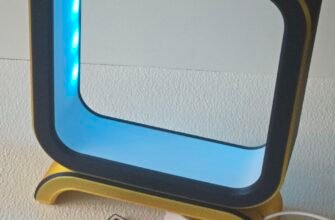
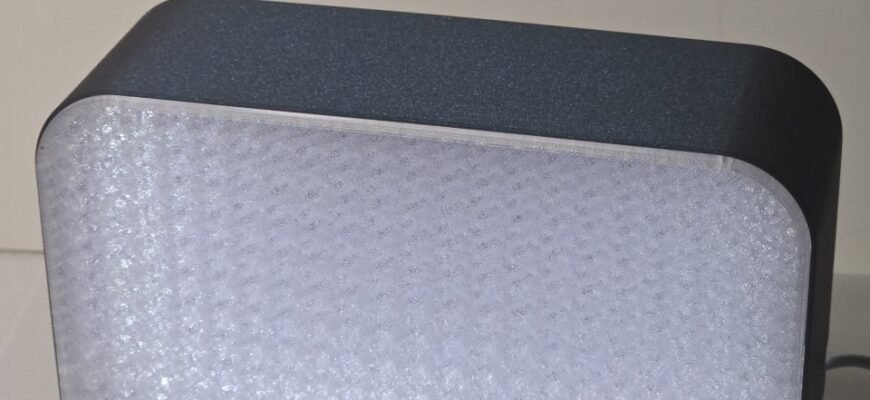
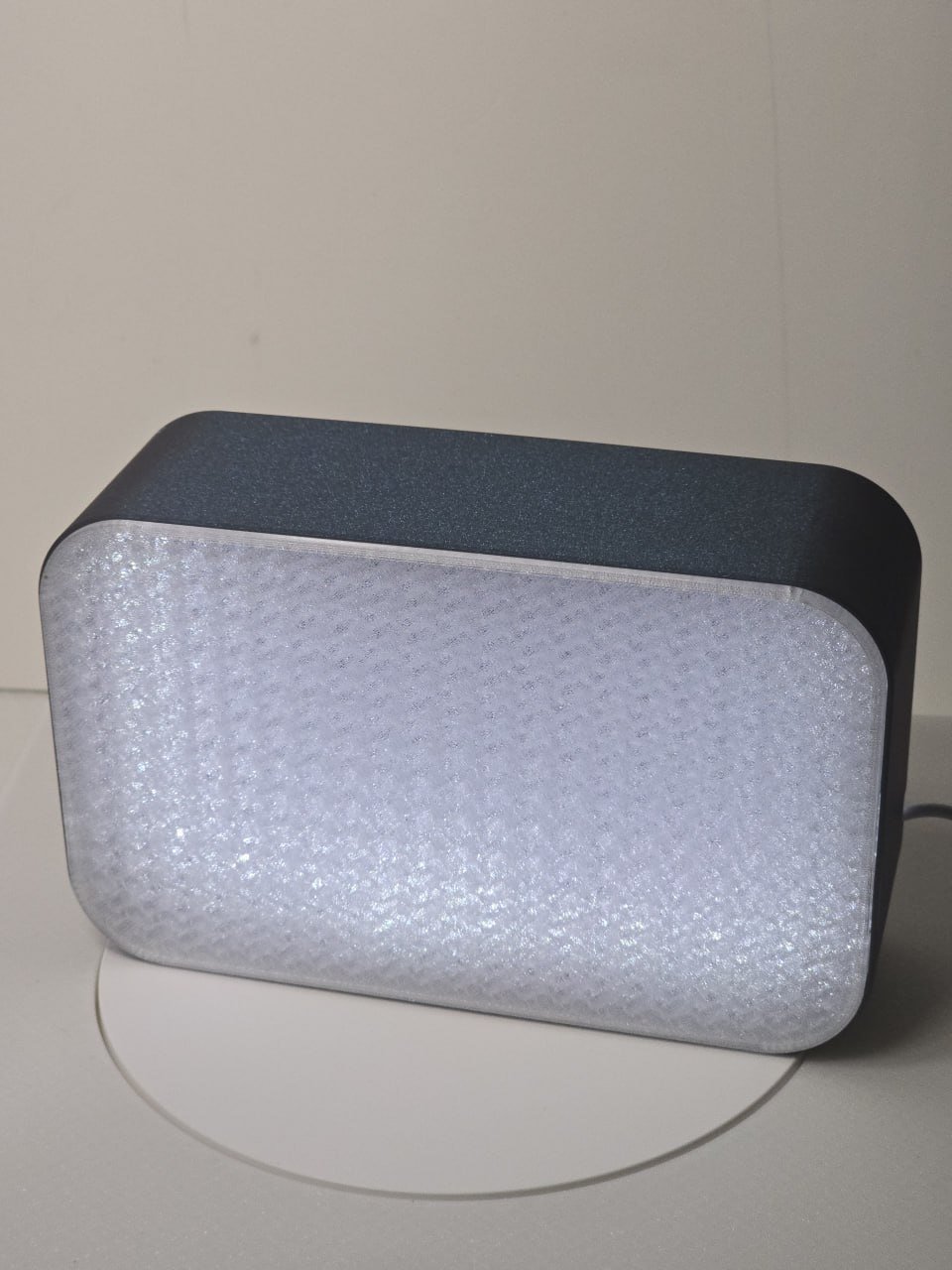
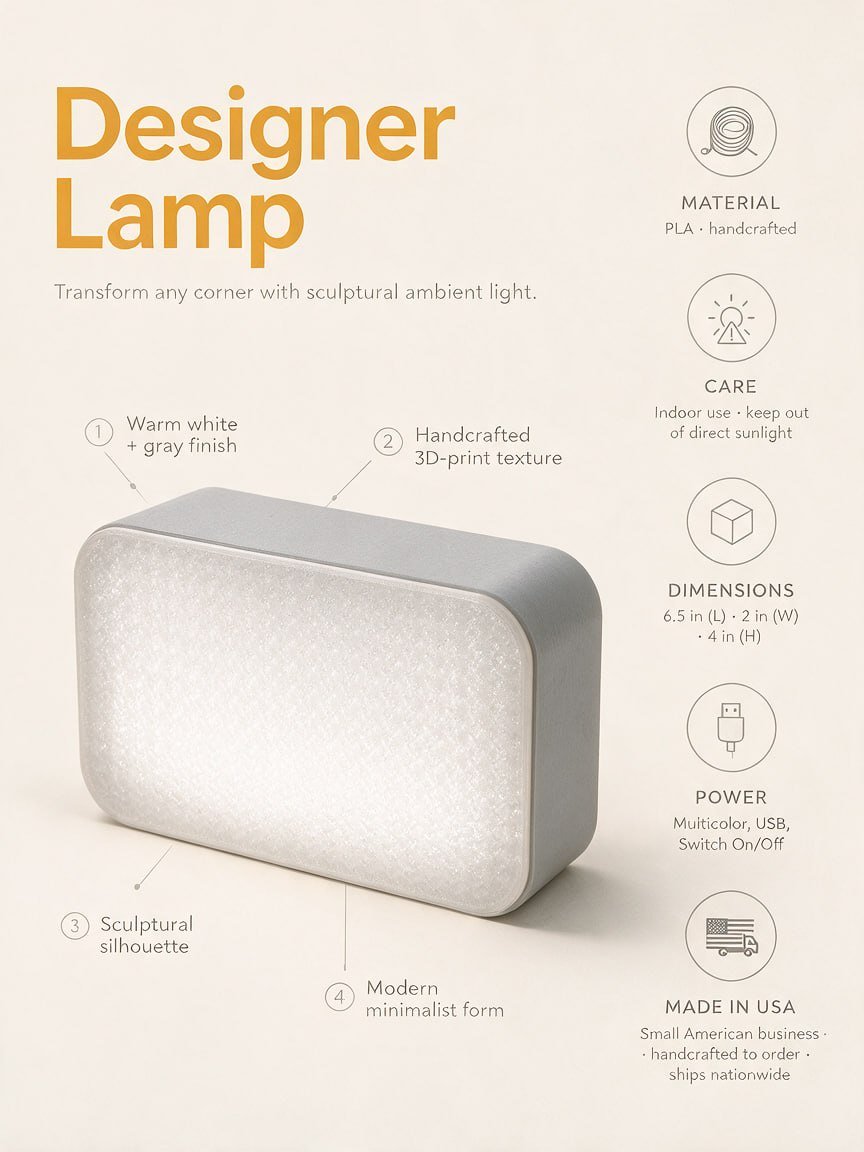
Custom3Dmodel develops each custom 3D printed lamp Miami project around its intended light source, appearance, and installation—not around a generic shell. We support modern tabletop lamps, compact LED light boxes, ambient-light enclosures, and illuminated display pieces for Miami clients, with project-based nationwide shipping options available. A rounded rectangular enclosure with softened edges and a textured translucent front panel is one representative concept; it can be adapted rather than treated as an off-the-shelf product.
Custom LED Light Boxes and Tabletop Lamps Designed for Miami Projects | custom 3D printed lamp Miami
A custom 3D printed lamp Miami order can start with a product idea, a hand sketch, a reference photo, or an existing CAD file. Custom3Dmodel helps homeowners, decorators, makers, product teams, retail businesses, and entrepreneurs turn those inputs into a manufacturable physical part. Typical projects include bedside mood lights, home-office décor, hospitality tabletop accents, branded retail displays, and compact housings that combine electronics with a clean exterior.
The quote depends on practical inputs: outer dimensions, LED type and brightness, power connection, body and diffuser material, finish, quantity, and requested delivery date. A small USB-powered accent light has very different internal requirements than a branded counter display running LED strips for long operating periods. Reviewing those details early prevents a visually attractive enclosure from becoming difficult to assemble or use.
What Can Be Customized in a 3D Printed Lamp or LED Light Box?
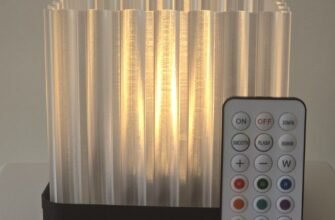
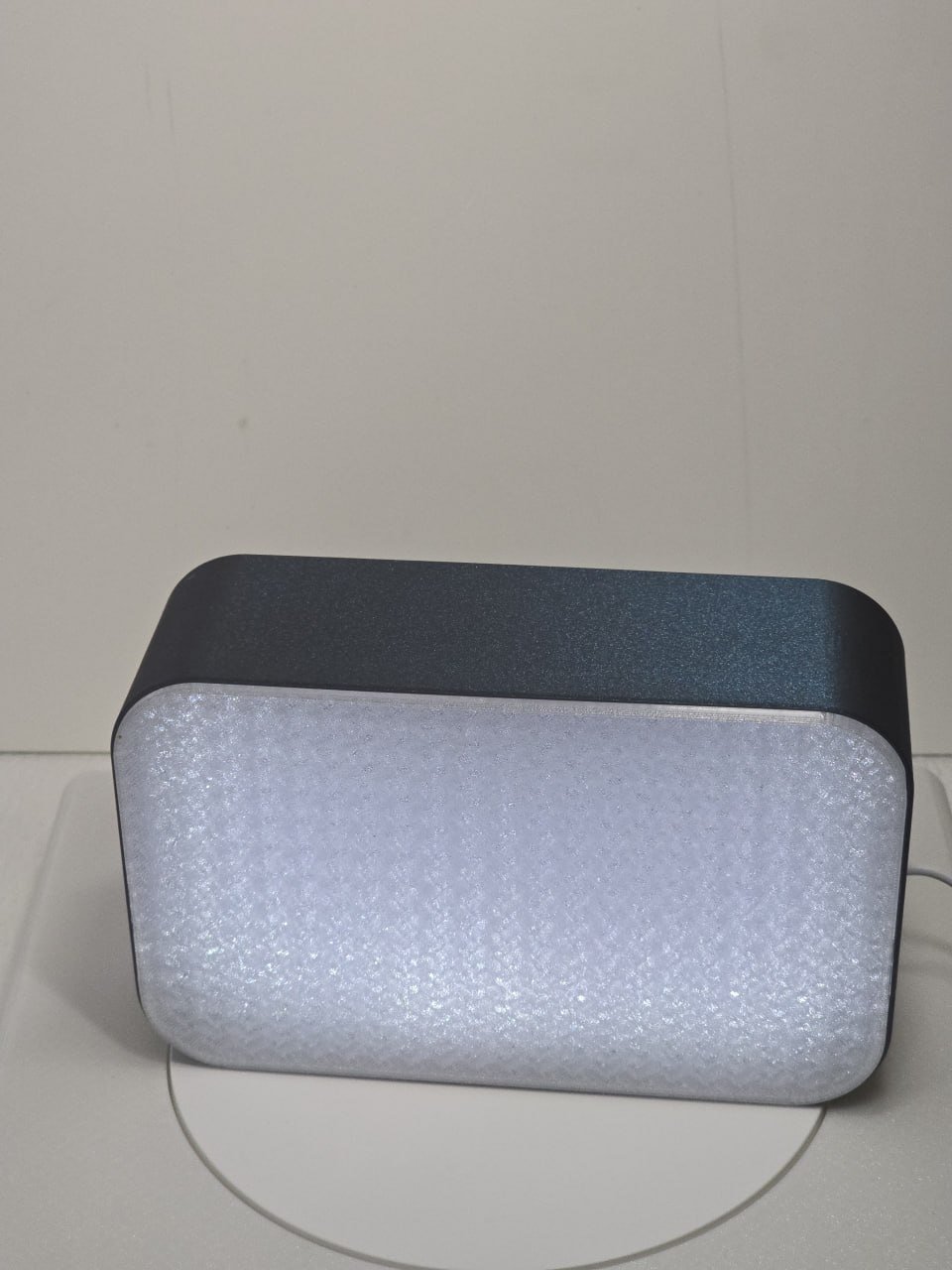
Visual customization can include a rounded rectangular silhouette, corner radius, enclosure color, matte or textured surface, raised or recessed logo areas, text, geometric patterns, and a branded front face. For the diffuser, Custom3Dmodel can model ribbing, a subtle wave texture, a grid, or other shallow surface patterns intended to soften the apparent point sources behind the panel. The final appearance is influenced by both CAD geometry and the selected printing process.
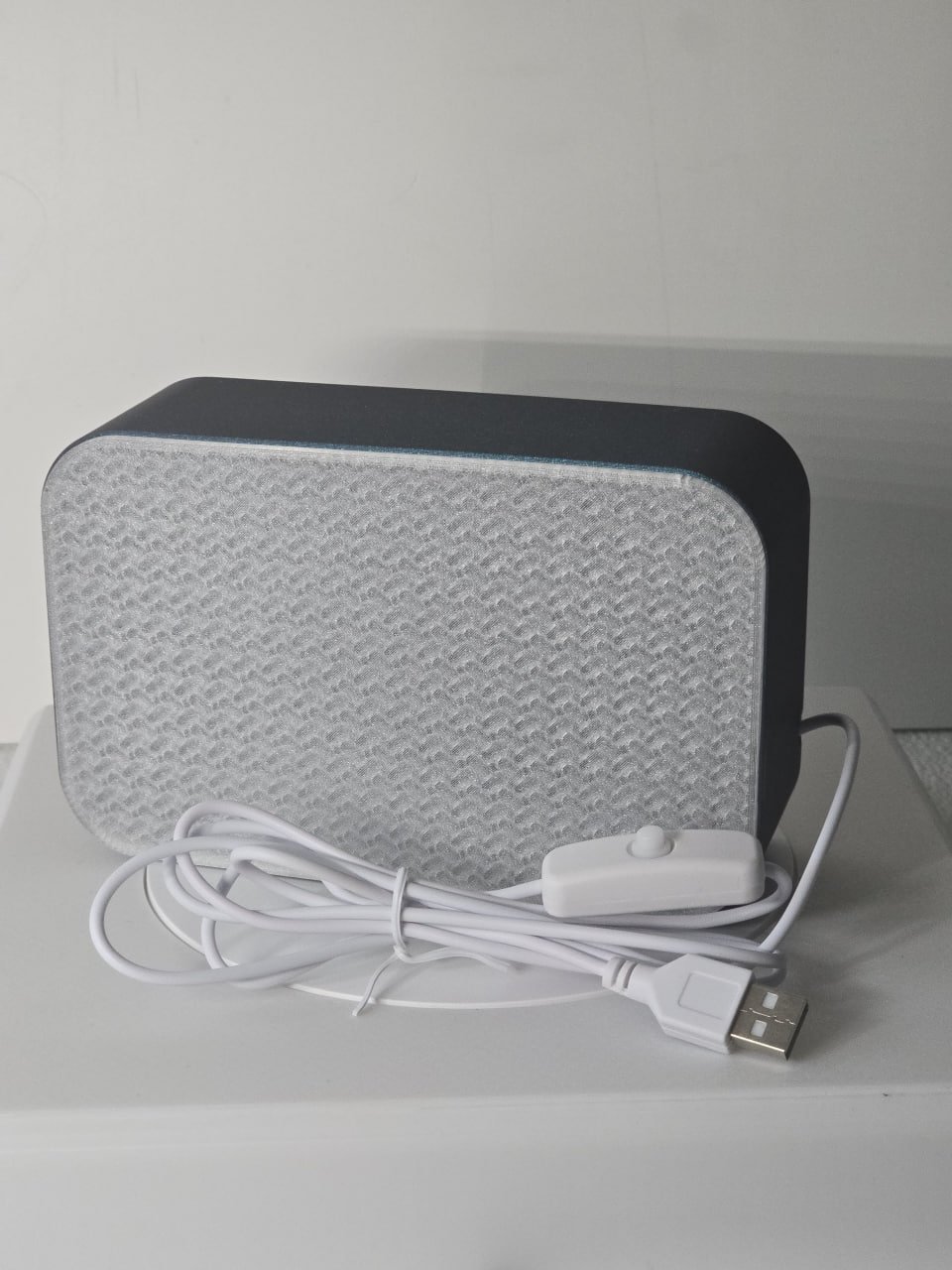
Functional details matter just as much. We can plan USB-port openings, power-switch locations, cable-routing channels, tabletop feet, wall-mount provisions, removable diffuser panels, internal partitions, and cavities for selected components. A custom electronic enclosure 3D printing project should be designed around the actual LED module, connector envelope, wire path, and power entry—not treated as decorative skin added after electronics are chosen.
For example, a diffuser that slides into edge rails needs a deliberate clearance allowance, while a serviceable panel may use screws, magnets, or snap features depending on material and expected use. Those decisions affect seam visibility, assembly sequence, and whether a user can access the light source later.
Representative Concept: Rounded-Edge LED Light Box With a Textured Diffuser
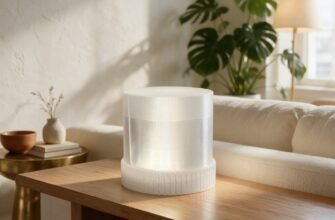
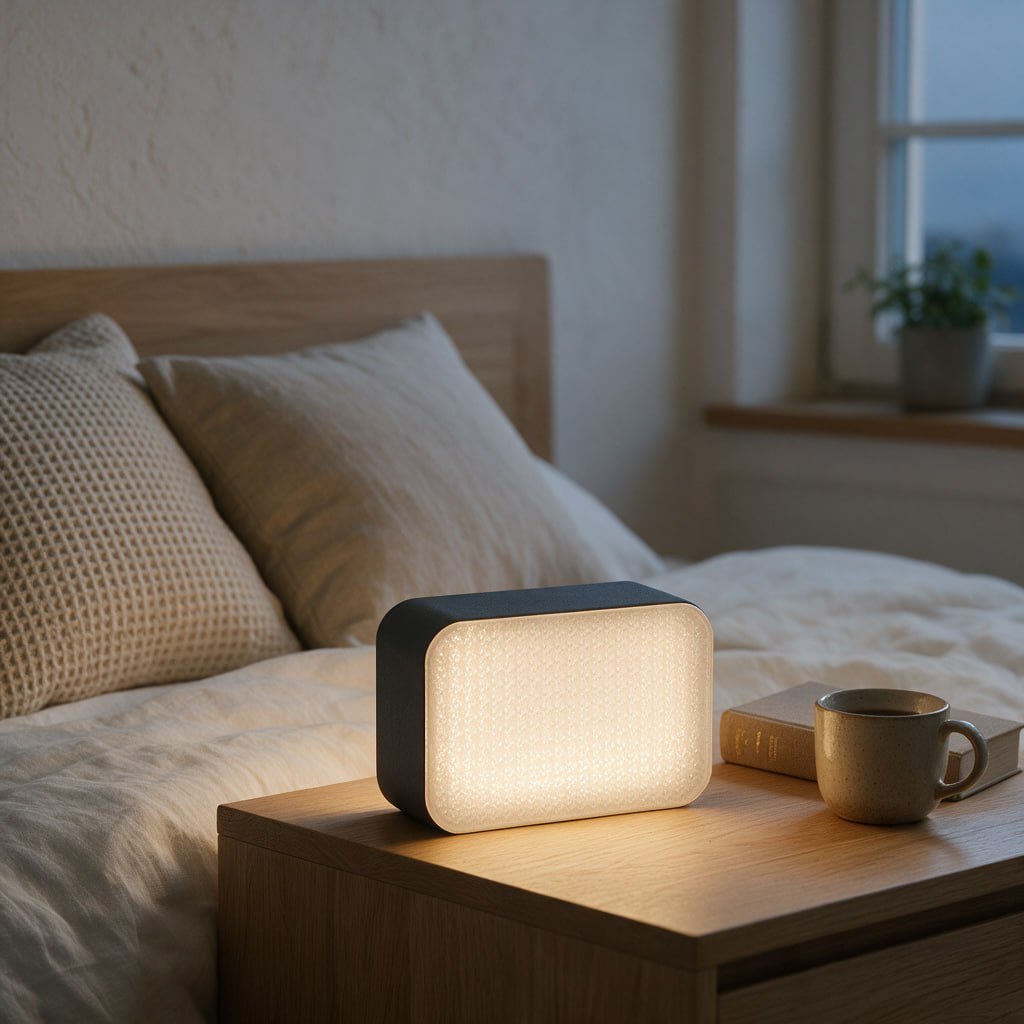
The representative light-box concept uses a compact hollow rectangular body with softened corners, a front-facing translucent panel, and room for warm ambient illumination behind it. Rather than exposing an LED strip directly, a textured diffuser breaks up concentrated points of light. This usually produces a calmer, more even glow and makes the piece feel more finished when viewed at close range.
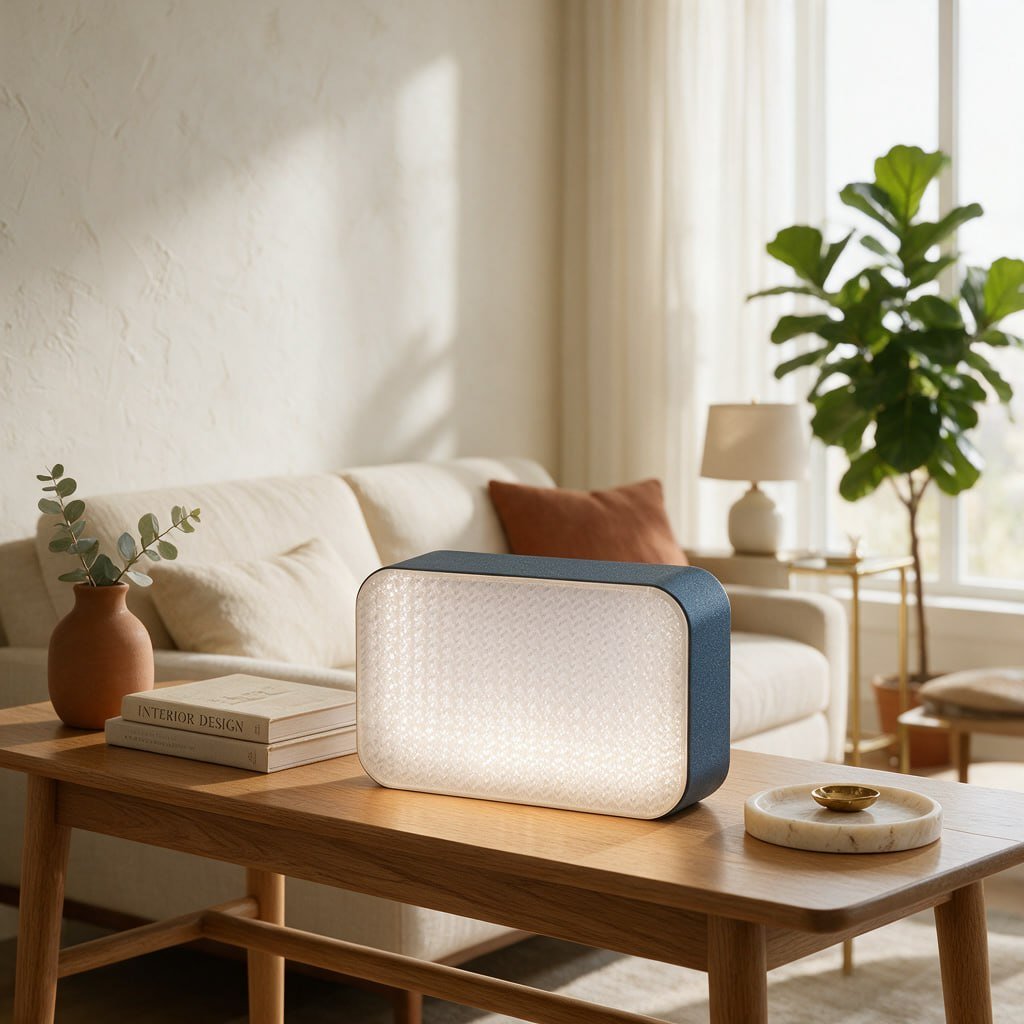
That same architecture can become a desktop lamp, bedside accent, branded display stand, retail counter piece, or an ambient-light electronic enclosure. The overall depth, front-panel pattern, mounting approach, and component access can all change to suit the specific application.
Custom 3D Printed Lamp Miami: From Idea to Prototype to Small-Batch Production
Custom3Dmodel works as a practical Miami product-development resource for lighting concepts that need modeling, design-for-additive-manufacturing review, prototype iterations, finishing, and small-batch production. For a custom 3D printed lamp Miami concept, the efficient sequence is to share an idea or file, receive design and material recommendations, approve a prototype, revise where necessary, and then move into additional units.
Rapid prototyping in Miami FL is especially useful before a customer commits to multiple lamps or displays. A physical sample reveals proportion issues that are hard to see in a render, such as an enclosure that feels too deep on a nightstand, a diffuser texture that is too transparent, a connector that is hard to reach, or a port opening that does not align with the chosen USB hardware. It also provides a chance to review panel fit, light spread, cable routing, and user interaction.
Clients can explore our custom 3D printing and prototyping services when deciding whether the project needs a one-off prototype, component-fit review, or a repeatable small production run. Production timing, finishing work, assembly scope, and quantities are confirmed through the custom quote process rather than assumed from a standard minimum order.
Step 1: 3D Modeling and Design-for-Additive-Manufacturing Review
A rough dimensioned sketch, inspiration image, or existing model is enough to begin a design discussion. For clients seeking 3D modeling for lighting products in Miami, Custom3Dmodel can develop or review printable geometry before production. We look at wall thickness, overhangs, rounded-edge transitions, orientation, and where the body should split for assembly.
We also plan practical retention details: screw bosses or inserts, snap-fit strategy, diffuser rails, panel stops, and access to internal components. A smooth outer corner may look simple, but it has to transition into printable wall geometry without weakening the enclosure or interfering with its internal volume.
Step 2: LED Component Fitment and Functional Prototype Testing
Enclosure dimensions should be based on the actual LED strips, modules, boards, connectors, switches, USB hardware, and power-routing requirements. A rapid prototype LED enclosure allows fit checks for wiring clearance, bend radius, port alignment, diffuser spacing, and assembly access before those features are repeated across a batch. It can also help identify where LEDs create visible hot spots through the front panel.
Custom3Dmodel can support enclosure prototyping, component-fit checks, and assembly planning. Electrical wiring, power supplies, and LED modules must be selected and assembled according to applicable safety requirements by the responsible qualified parties. Our enclosure and prototype work does not represent an electrical certification or a guarantee of electrical performance.
Step 3: Prototype Approval, Finishing, and Small-Batch Lighting Production
Before approving additional parts, review the prototype for body proportions, diffusion quality, front-panel fit, surface appearance, stability on a tabletop, and access to controls. Depending on material and scope, post-processing may include sanding, painting, smoothing, insert installation, panel finishing, or agreed assembly work.
This process suits small batch custom lighting production for Miami homes, offices, retail spaces, hospitality venues, event installations, and local product launches. A prototype revision is often less costly than discovering a fit or appearance problem after multiple housings are complete.
Choosing Materials for Lamp Bodies, Diffusers, and Electronic Enclosures
Material selection for a custom 3D printed lamp Miami project is use-specific. Heat output, LED placement, power components, ventilation needs, intended environment, desired surface finish, and how the item will be handled all need review. A decorative indoor lamp body, a functional device enclosure, and a translucent front panel should not automatically use the same polymer.
Material suitability is project-specific and does not replace safety validation, thermal testing, or electrical certification. The responsible parties should address those requirements for the intended finished product.
PLA, PETG, and ABS for the Main Lamp Housing
PLA lamp 3D printing is often practical for lower-heat decorative prototypes and interior ambient-light products where print appearance and efficient production are priorities. It works well for a concept lamp body that needs crisp branding, a matte finish, or fast iteration, provided the expected heat exposure and placement are appropriate.
PETG lamp 3D printing can be a better direction when improved resilience and durability are useful for a functional body or custom electronic enclosure. It is commonly considered for pieces likely to be handled frequently or used in more demanding indoor environments. ABS electronic enclosure printing can be considered for applicable functional housings where a more heat-tolerant material is desired and appropriate printing and finishing conditions are used. The appropriate body material should be selected only after reviewing heat sources, ventilation, handling, and finish expectations.
Translucent Filament and Transparent Resin for Light-Diffusing Panels
A translucent filament light diffuser can be an effective, cost-conscious FDM option for a durable front panel. Its layer structure and controlled wall thickness can contribute to diffusion, especially when combined with a frosted outer texture. For a 3D printed light diffuser, however, “translucent” does not automatically mean uniform: pigment level, print settings, texture, and LED distance all change the result.
Transparent resin light panels can be considered when finer pattern detail, smoother surfaces, or intricate translucent textures are priorities. SLA light diffuser printing is useful when a shallow embossed logo or delicate micro-texture must read cleanly on the front face. Opacity, thickness, texture depth, panel finish, and spacing from the LEDs determine brightness, uniformity, and whether individual LEDs remain visible. When the visual effect is critical, Custom3Dmodel recommends material swatches or small panel tests before final production.

FDM vs. SLA for Custom Lighting Products
FDM lamp printing is generally the practical choice for durable lamp bodies, larger shells, internal ribs, cable channels, mounting features, and cost-effective production of multiple units. It is well suited to a rounded-edge enclosure where the outer body must contain cavities, feet, screw points, and a removable front panel. FDM is also a strong option for translucent diffuser panels when a more economical, robust component is acceptable.
SLA is valuable when the front panel needs very smooth surfaces, fine embossed details, transparent or translucent effects, or tightly controlled texture reproduction. It may be used for a high-detail diffuser while FDM produces the structural shell. This hybrid approach—an FDM body paired with an SLA front panel or separate diffuser—often gives a better balance of cost, strength, and appearance than forcing one process to do everything.
For each custom 3D printed lamp Miami request, Custom3Dmodel can recommend FDM, SLA, or a hybrid build after reviewing size, desired finish, component layout, light effect, and production quantity.
Functional Design Considerations for LED Enclosures
A polished exterior is only one part of a successful LED enclosure. The interior must leave sufficient room between components and enclosure walls, route wires without sharp pinches, provide access to connectors, and place USB ports or switches where users can actually reach them. Cable exits may need strain relief, especially when a tabletop light will be moved regularly.
LED heat considerations depend on the module, power source, operating duration, and environment. Ventilation may be appropriate in some configurations, but vent placement must be balanced against light leaks, dust entry, aesthetics, and the desired enclosure stiffness. Component placement also affects the diffuser: LEDs too close to a clear panel create hot spots, while excessive spacing can make a compact lamp unnecessarily deep.
Diffuser fitment deserves equal attention. The panel needs reliable retention, controlled assembly tolerances, and service access if replacement is expected. Edge lips, gaskets, internal baffles, or recessed channels can limit unwanted light leakage around the perimeter. Safety, thermal, and certification requirements vary by intended use and should be addressed by responsible qualified parties.
Designing for Better Ambient Light Diffusion
Better 3D printed ambient lighting comes from managing the whole optical path. A textured or frosted panel, controlled panel thickness, and adequate LED-to-diffuser distance usually improve perceived uniformity. During prototyping, internal baffles, reflective interior surfaces, and LED orientation can be evaluated to reduce bright points and uneven edge illumination.
The rounded rectangular light box is a useful example: its minimalist face can conceal panel rails and baffles while the softened external corners make the object feel intentional in a home, office, or hospitality setting. The goal is not only attractive illumination but also a practical assembly that can be repeated.
Miami Use Cases for Custom Lamps and Illuminated Displays
Custom 3D printing in Miami Florida supports both decorative and commercial lighting ideas. High-intent projects include personalized bedside lamps, home-office ambient lights, hospitality tabletop accents, retail branded display stands, event pieces, and product-launch samples. Logo zones, selected colors, custom dimensions, and tabletop or mounted configurations can be integrated into the original model instead of added as an afterthought.
A custom 3D printed lamp Miami project can also overlap with product enclosure needs. A speaker housing, control-device casing, or desktop electronic accessory may need a light feature that is visually integrated with vents, controls, cable exits, and internal component mounting. Producing a prototype first provides a credible way to evaluate those interfaces before a small batch is requested.
Why Work With Custom3Dmodel for a Custom Lighting Project?
Custom3Dmodel brings a manufacturing-first workflow to lighting concepts: 3D modeling, additive-manufacturing review, FDM and SLA production, prototype iteration, post-processing, diffuser fabrication, component-fit testing, and small-batch planning. The work is centered on making the geometry printable, assembleable, and appropriate for the selected components—not simply making a render look good.
Where available, project documentation can include CAD renders, real prototype photos, before-and-after revisions, material swatches, dimensional fit checks, cable-routing examples, and textured diffuser-panel tests. These artifacts are valuable because they show how a lighting product moved from concept to an evaluated physical part.
Technical review: Custom3Dmodel product-development team, with hands-on experience in 3D modeling, additive manufacturing, functional prototyping, and design-for-manufacturing review.
What to Send for an Accurate Custom Lamp or LED Light Box Quote
Upload a sketch, reference image, approximate dimensions, logo artwork, or an existing 3D file. To quote a custom 3D printed lamp Miami concept accurately, include the overall size, intended brightness, LED type, power or USB requirements, internal component layout, expected heat output, cable-routing needs, diffuser opacity or texture, color, finish, tabletop or mounting needs, target quantity, and deadline.
If you do not yet know the best material, print process, panel pattern, or assembly strategy, Custom3Dmodel can provide recommendations based on the intended use. For pricing based on actual geometry and production requirements, start by getting an instant 3D printing quote. Miami clients can also identify their location and preferred consultation, pickup, delivery, or shipping requirements, subject to project confirmation.
Frequently Asked Questions About Custom 3D Printed Lamps in Miami
Custom lighting specifications vary by size, electronics, material, finishing, quantity, and current production scheduling. These answers outline the information Custom3Dmodel uses to evaluate a project.
Can I order a custom 3D printed tabletop lamp or LED light box?
Yes. Custom3Dmodel can evaluate concepts for tabletop lamps, 3D printed light boxes, ambient-light enclosures, and branded illuminated display pieces. A quote begins with intended dimensions, lighting components, desired finish, mounting needs, and quantity.
Which material is best for a lamp housing and diffuser?
PLA is often suitable for lower-heat decorative prototypes; PETG can suit more durable lamp bodies; ABS may be considered for applicable functional enclosure needs. Translucent filament works for many diffuser panels, while transparent resin suits detailed translucent faces. LED heat, ventilation, component placement, and safety requirements determine the final choice.
Can a textured diffuser panel be 3D printed?
Yes. A textured translucent front panel can diffuse light while supporting a modern light-box appearance. Sample panels are useful for checking opacity, texture visibility, and LED hot-spot reduction before small-batch production.
Do I need a finished 3D file before starting?
No. You can provide a sketch, dimensions, inspiration image, or rough concept for modeling support. Existing CAD files can also be reviewed for manufacturability, component fitment, and the appropriate FDM or SLA process.
Can you produce small batches of custom lighting products?
Small-batch custom lighting production can be evaluated after prototype approval. Quantity, finishing, assembly needs, material choice, and delivery timing are quoted per project rather than assumed by a standard package.
Request a Custom 3D Printed Lamp or LED Light Box Quote
Contact Custom3Dmodel to discuss your custom 3D printed lamp Miami project, LED enclosure prototype, diffuser panel, or small-batch illuminated display. Upload Your Sketch, Reference Image, or 3D File. Include your Miami location, dimensions, lighting components, material preference, target quantity, and project deadline so we can evaluate the most practical path to production.
Custom3Dmodel can discuss Miami-area project coordination and nationwide shipping options based on the specific design, finishing, quantity, and delivery requirements.
Custom 3D Printed Lamp Options in Miami: Designs, Uses and Recommended Builds
| Lamp Style | Best Use | Recommended Material | Lighting Feature | Typical Size |
|---|---|---|---|---|
| Geometric Table Lamp | Modern living rooms, bedside tables and office desks | PLA or PETG body with translucent PLA diffuser | Soft ambient LED glow through patterned walls | 8–16 in. tall |
| Personalized Name Light Box | Children’s rooms, gifts, storefront displays and events | PLA or ABS housing with translucent front panel | Backlit names, logos or custom messages | 6–24 in. wide |
| Lithophane Photo Lamp | Memorial gifts, family décor and personalized keepsakes | White PLA or resin image panel with PLA base | LED illumination reveals detailed photo imagery | 4–10 in. tall |
| Logo or Brand Display Lamp | Miami retail counters, reception desks and trade-show booths | PETG or ABS body with transparent resin front | Illuminated logo, lettering or icon cutouts | 8–36 in. wide |
| Organic Sculptural Lamp | Boutique interiors, hospitality spaces and statement home décor | PLA for indoor décor or PETG for added durability | Decorative shadows from wave, lattice or nature-inspired forms | 12–30 in. tall |
| Smart Speaker Lamp Housing | Custom electronic enclosures, desktop devices and prototypes | PETG or ABS for the main casing | Integrated LED openings, cable channels and ventilation | 5–14 in. tall |
Resources & Useful Links
- 📚 Fused Deposition Modeling (Wikipedia) — Background on fused-filament fabrication (FFF/FDM), the extrusion-based process commonly used for custom lamp bodies, housings, diffusers, and light-box structures.
- 🏢 Prusa Knowledge Base: Material Guide — Practical official guidance on selecting and printing common filaments, including PLA, PETG, ABS, and translucent materials relevant to decorative illuminated parts.
- 🏢 UltiMaker Materials — Official material overview covering engineering and standard 3D-printing polymers, useful when comparing material properties for functional lamp enclosures and electronic-device casings.
- 🏢 Formlabs Materials — Official resin-material resource for SLA printing, including clear and tough resin options that can be considered for detailed translucent front panels and light-box components.