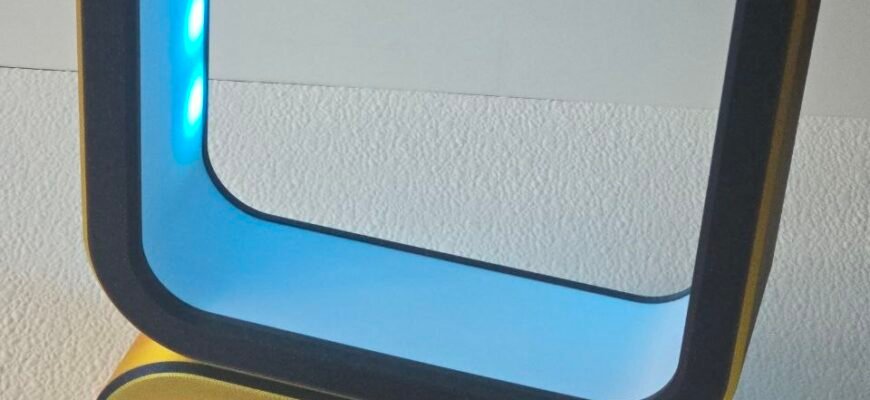
- custom 3D printed LED table lamp Miami
- Custom LED Lamp Design, 3D Modeling, and Printing in Miami
- What Can Be Customized for a Modern 3D Printed Table Lamp?
- Concept Showcase: Open Rectangular LED Light Frame With Curved Stand
- Custom 3D Printed LED Table Lamp Miami Workflow
- CAD Design for LED Strips, Wiring, Switches, and Remote-Control Enclosures
- Designing Functional FDM Printed Lamp Parts: Stability, Fit, and Assembly
- PLA vs. ABS for a 3D Printed Decorative Lamp
- Electrical Safety Boundaries for 3D Printed LED Lamp Projects
- Post-Processing for a Finished Decorative Lighting Product
- From One Custom Lamp Prototype to Small-Batch 3D Printing in Miami
- Why Work With Custom3Dmodel for Miami LED Lamp Prototyping?
- What to Send for a Custom LED Lamp Quote
- Frequently Asked Questions About Custom 3D Printed LED Table Lamp Miami
- Request a Custom Miami LED Lamp Quote
- Custom 3D Printed LED Table Lamp Design Options in Miami
- Resources & Useful Links
custom 3D printed LED table lamp Miami
Custom LED Lamp Design, 3D Modeling, and Printing in Miami
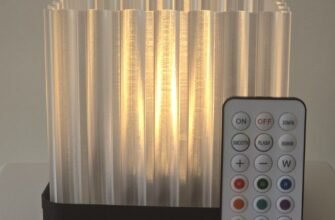
A custom 3D printed LED table lamp Miami project can begin with a pencil sketch, a Pinterest-style reference image, exact dimensions, or an existing STL, STEP, or CAD file. Custom3Dmodel helps turn that concept into a manufacturable decorative lighting structure: an open rectangular light frame, sculptural base, LED housing, diffuser support, or functional enclosure designed around the components you intend to use.
For clients seeking a 3D printing service Miami provider, the scope can range from one custom decorative prototype to replacement lamp parts or a small run of matching lighting structures. Through our custom 3D printing services, Custom3Dmodel can support CAD modeling, FDM prototyping, fit-focused enclosure design, finishing coordination, and small-batch production. Printed parts can form the body, frame, base, diffuser holder, wire-routing structure, and electronics housing; the electrical system itself requires suitable component selection, qualified design, testing, and assembly.
What Can Be Customized for a Modern 3D Printed Table Lamp?
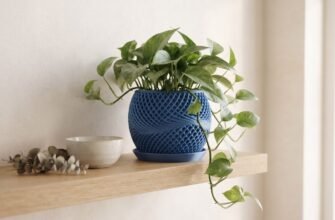
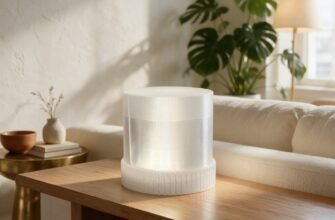
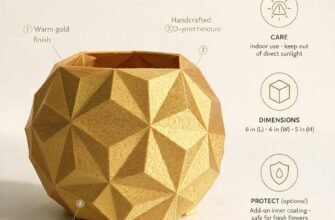
A 3D printed table lamp does not need to follow a standard shade-and-base format. A modern 3D printed lamp design may use an open square or rectangular frame, a curved support arm, a rounded base, offset geometry, or layered panels that cast light in a specific direction. Frame thickness, stand angle, base diameter, color, texture, matte or gloss finish, and diffuser style can all be developed around the visual goal.
These structures work well for indoor ambient desk lighting, reception-area decor, office accent pieces, and personalized home decor. For custom ambient lighting decor, the important question is not only how the lamp looks when switched off, but also how its surfaces reflect or soften the light when illuminated. A 3D printed decorative lamp intended for a Miami home or office may prioritize a clean modern silhouette, while 3D printed home decor Miami projects for display spaces may call for a more branded or sculptural form. Final feasibility depends on dimensions, LED components, heat output, finish requirements, and target quantity.

Concept Showcase: Open Rectangular LED Light Frame With Curved Stand
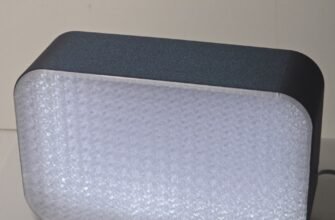
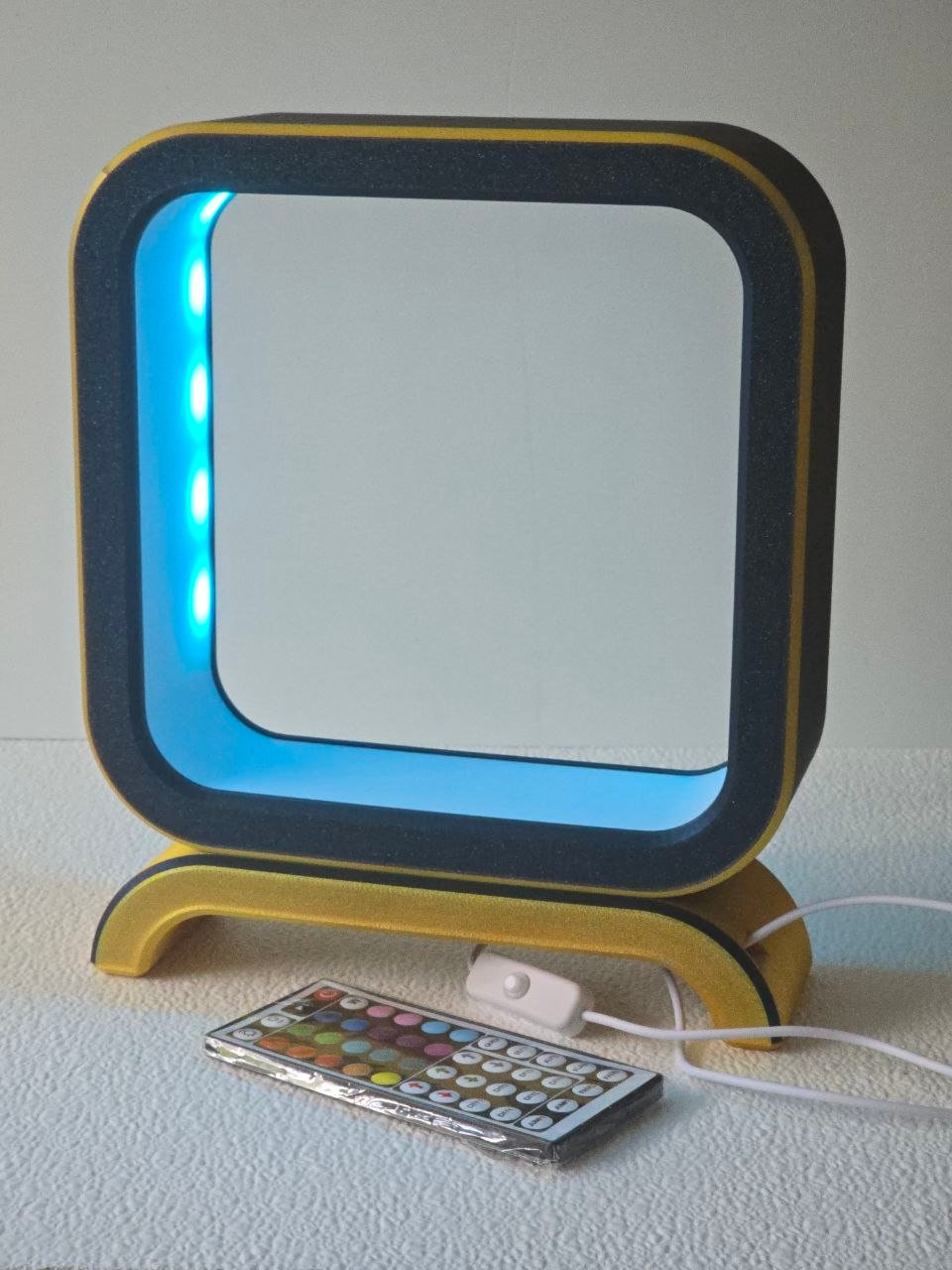
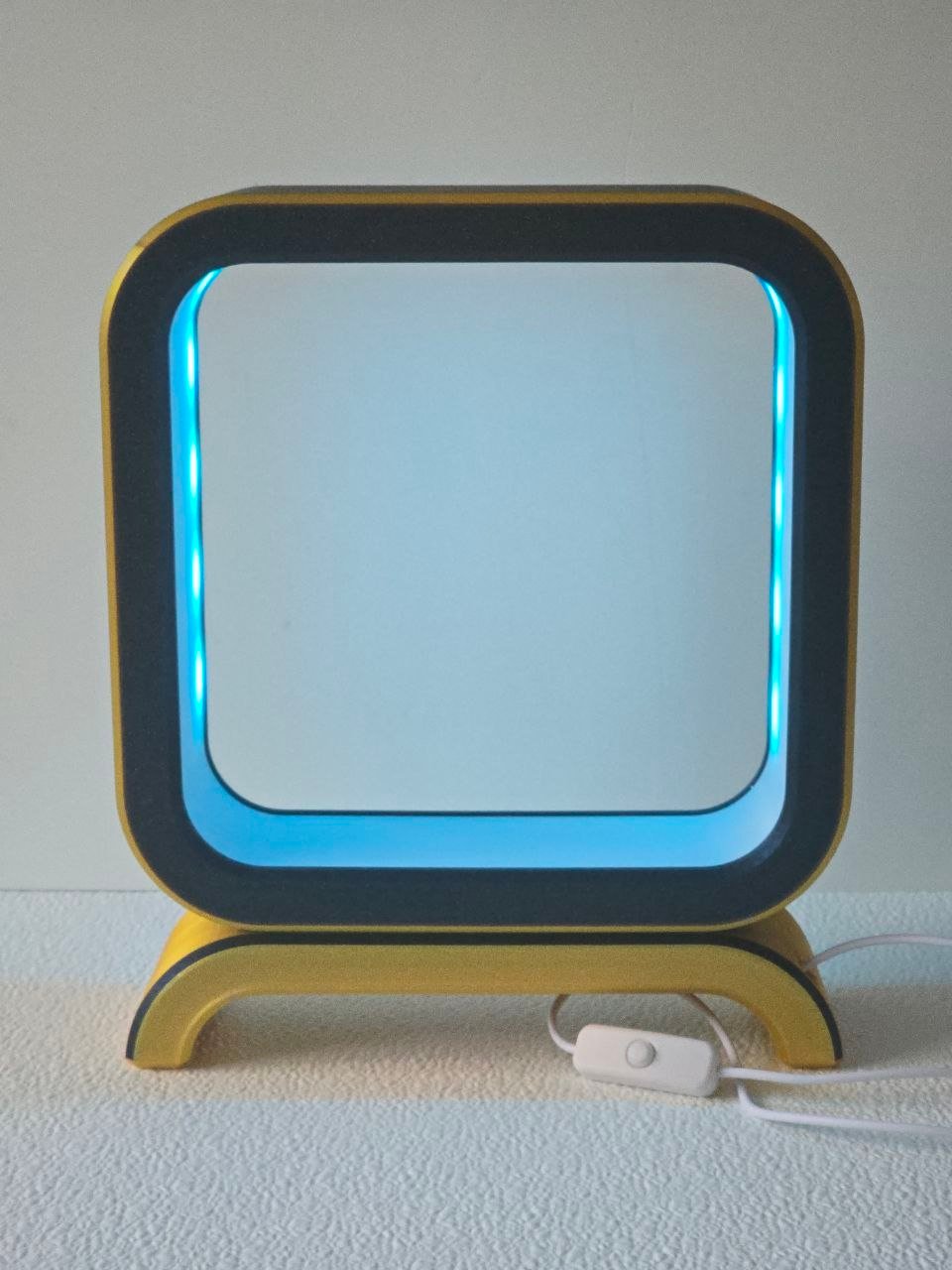
Concept rendering caption: A custom 3D printed LED table lamp Miami concept featuring an open rectangular light frame, curved stand, and rounded base. Visible features may include a recessed LED-strip channel along the inner frame, a concept-dependent switch position at the base, and clearance for remote-control operation.
The exact frame size, strip placement, power-entry location, diffuser profile, receiver location, and internal fastening method are concept-dependent. For example, an exposed LED strip creates a more direct visual line, while a diffuser channel can produce a softer glow but needs accurate clearance and retention features. Submit a reference image for a custom lamp prototyping Miami review so the visual idea can be evaluated alongside the physical components.
Custom 3D Printed LED Table Lamp Miami Workflow
Custom3Dmodel uses a review-first workflow because decorative form and internal component layout must be resolved together. The process typically starts with concept review: reference images, required dimensions, intended use, LED information, preferred material, and target quantity. If you have a ready file, it can be inspected for printability; if not, CAD modeling can be developed from your sketch or measured components.
Next comes a design-for-FDM review covering wall thickness, print orientation, support strategy, seams, tolerances, and assembly access. A functional prototype is then useful for checking the proportions on a real desk or counter, the base stability, LED-channel fit, diffuser alignment, wire access, and assembly sequence. After lighting and fit evaluation, the model can be revised, a finish approach approved, and the project planned for a small batch if needed.
This approach is especially valuable for 3D modeling and printing Miami projects where the lamp may look simple externally but must conceal connectors, bends in wiring, receiver modules, and removable service covers. Timeline and project scope are quoted after the design requirements and intended production level are reviewed.
CAD Design for LED Strips, Wiring, Switches, and Remote-Control Enclosures
Custom CAD modeling can build the mechanical features that make a lighting concept practical to assemble. Depending on the supplied electronics, this can include LED-strip mounting channels, wire-routing paths, connector pockets, strain-relief locations, driver or battery compartments, access panels, switch openings, and remote receiver clearance. A remote control LED lamp enclosure needs enough room not only for the receiver board but also for plug orientation, cable bend radius, and future access if a component must be replaced.
Hidden fastening concepts are equally important. Screw bosses, alignment tabs, removable covers, snap-fit features, and bonded joints each affect the part geometry and post-print workflow. For FDM printed lamp parts, tolerances need to account for printer variation, LED-strip backing thickness, diffuser fit, connector dimensions, and joints that must be assembled after printing. A custom decorative lighting prototype is the right stage to verify these features before committing to multiple finished pieces.
Designing Functional FDM Printed Lamp Parts: Stability, Fit, and Assembly
A tall open-frame lamp can be deceptively demanding. The visual frame may be light, but it creates leverage on the base if the unit is bumped or if a power cable is pulled. We review base footprint, center of gravity, stand-to-base connection strength, and cable exit direction early. A weighted base or a broader base geometry may be appropriate when the frame rises high above the tabletop.
Fused Deposition Modeling (FDM) also requires intentional structural decisions. Wall thickness must support the intended rigidity without making the part unnecessarily heavy or slow to print. Layer orientation matters because a joint loaded across layer lines behaves differently from one loaded along the printed layers. Support placement can affect visible surfaces, while long bridges may need redesign or a separate diffuser cover to avoid sagging.
A large rectangular frame may be split into several pieces when that improves build-volume compatibility, surface quality, strength, or access for internal wiring. Seams can be placed on less visible edges and considered during sanding or painting. Before a production run, a prototype should confirm frame rigidity, wobble, LED-strip adhesion, cable routing, electronics access, and the actual illumination effect in the intended indoor setting.
PLA vs. ABS for a 3D Printed Decorative Lamp
PLA is often a sensible choice for a cool-running indoor decorative prototype and low-heat LED application. A PLA 3D printed lamp can provide a clean FDM appearance and predictable production for cosmetic housings, bases, and frames. It is not automatically the right answer for every lamp, however. Enclosed drivers, warmer LED assemblies, limited ventilation, and direct sun exposure can change the material requirements.
An ABS 3D printed lamp may be considered where greater heat resistance and toughness are needed. ABS can be useful for certain enclosures and structural areas, but the decision should be based on measured operating temperatures, lamp geometry, ventilation, component specifications, and intended use environment—not simply on the material name. Custom3Dmodel can assess whether a custom 3D printed LED table lamp Miami project is better suited to PLA or ABS after reviewing the lighting and enclosure details.
Electrical Safety Boundaries for 3D Printed LED Lamp Projects
Custom3Dmodel supports the mechanical and cosmetic side of a lamp project: bodies, frames, bases, LED channels, wire paths, enclosures, covers, and assembly features. The printed structure should be designed with ventilation, wire clearance, service access, and separation from heat-generating components in mind.
Voltage selection, drivers, LEDs, connectors, switches, remote-control systems, wiring, heat management, electrical testing, and final compliance require suitable qualified electrical design, components, testing, and assembly. Custom3Dmodel does not imply the supply of UL-listed assemblies, certified electrical engineering, electrical installation, or code-compliant finished lamps unless those capabilities are separately verified. Providing the exact electronics and their specifications during design review is essential to creating an enclosure that fits them correctly.
Post-Processing for a Finished Decorative Lighting Product
FDM is efficient for functional prototypes and decorative forms, but visible layer lines are part of the standard printed finish unless additional finishing is specified. Post-processing can include support removal, sanding, filling, priming, painting, and coordinated assembly of structural and decorative components. A raw printed finish can suit a technical or contemporary look; a painted finish can better match polished custom home decor manufacturing Miami requirements.
Finish selection affects cost, scope, production planning, and how light reflects across the surfaces. Matte paint can soften reflections, while gloss can emphasize curves and seams. If the lamp is split into several printed pieces, joint placement should be planned in CAD so seams can be minimized or concealed during finishing.
From One Custom Lamp Prototype to Small-Batch 3D Printing in Miami
Projects may involve one concept prototype, a replacement lamp part for an existing fixture, several matching office decor pieces, or a small production batch of decorative lighting structures. For small batch 3D printing Miami projects, prototype validation is what prevents repeated fit issues. The sequence is typically CAD review, functional print, lighting and fit evaluation, design revisions, finish sample approval where applicable, and scaled production.
Custom 3D printing Miami Florida production planning depends on part size, the number of printed components per lamp, material, finishing requirements, assembly complexity, and quantity. Decorative product prototyping Miami clients benefit from testing the actual LED strip, diffuser, power-entry hardware, and enclosure components before approving multiples. This is the practical route to custom home decor manufacturing Miami that maintains the intended appearance while accounting for real assembly conditions.
Why Work With Custom3Dmodel for Miami LED Lamp Prototyping?
Custom3Dmodel approaches decorative lighting as a manufacturable product problem, not just a visual print. A strong concept must account for frame rigidity, a stable base, wall thickness, LED-channel tolerances, wire clearance, electronics enclosure space, hidden fasteners, and a realistic post-print assembly plan. These details are where an attractive render becomes a practical physical object.
Custom3Dmodel.com can support CAD modeling, PLA or ABS FDM prototype development, post-processing coordination, fit-focused enclosure design, and small-batch production for decorative lighting structures. Whether you need a one-off custom 3D printed LED table lamp Miami prototype or a repeatable group of display pieces, the team reviews the file, components, and intended finish before defining a production path.
What to Send for a Custom LED Lamp Quote
Send a sketch, reference images, an existing 3D file, target dimensions, desired frame shape, preferred color, finish, intended indoor use, and quantity. If you are replacing a part, include photos of the existing component, measurements, mating features, and any hardware that must be retained.
For the lighting side, provide the LED-strip type, voltage, power source, driver location, remote receiver dimensions, switch type, connector details, wiring diagram if available, expected heat output, and diffuser requirements. Also identify your fastening strategy, access-panel needs, removable parts, and whether the electronics are already available for integration. Complete information lets Custom3Dmodel assess manufacturability and prepare a more accurate scope and quote. You can also begin by getting an instant 3D printing quote for an existing printable file.
Frequently Asked Questions About Custom 3D Printed LED Table Lamp Miami
Can a custom 3D printed LED table lamp Miami project start from only a sketch or photo?
Yes. A sketch, product inspiration image, or photo can be used as a starting point for CAD development. Dimensions, desired proportions, and the actual LED, driver, switch, and diffuser components should be supplied where possible so the printed structure can be designed around them.
Is PLA or ABS better for a custom lamp?
PLA may suit cool-running indoor decorative lamps and low-heat LED applications. ABS may be considered where increased heat resistance and toughness are needed. The proper choice depends on actual operating temperature, ventilation, enclosure geometry, component specifications, and the intended environment.
Does Custom3Dmodel install or certify the electrical components?
Custom3Dmodel supports printed mechanical and decorative components, including housings, frames, bases, wire-routing features, and access covers. Electrical design, wiring, safety testing, component selection, and compliance require appropriate qualified electrical design and assembly processes.
Can you make one prototype, a replacement part, or a small batch?
Yes. Scope can range from one concept lamp or replacement component to several decorative pieces or a small batch. Pricing and production planning depend on the geometry, material, print size, number of parts, finishing level, assembly requirements, and quantity.
Request a Custom Miami LED Lamp Quote
Upload a sketch, reference image, or existing 3D file to Custom3Dmodel for a custom 3D printed LED table lamp Miami design and manufacturability review. We can discuss CAD modeling, PLA or ABS FDM prototypes, LED enclosure requirements, post-processing, and small-batch decorative lamp production for Miami and South Florida projects.
Nationwide customers can also request a quote for projects that can be shipped nationwide. Include dimensions, LED and power details, remote-control specifications, finish preferences, target quantity, and indoor-use requirements so Custom3Dmodel can recommend a practical path from concept to printed lighting structure.
Custom 3D Printed LED Table Lamp Design Options in Miami
| Lamp Design Style | Recommended Size | Lighting Effect | Best Location | Customization Ideas |
|---|---|---|---|---|
| Geometric lattice lamp | 8–12 in. tall | Patterned shadows and soft ambient glow | Modern living rooms or reception desks | Hexagonal, spiral, or Voronoi cutout patterns |
| Personalized name lamp | 6–10 in. tall | Warm accent lighting with illuminated text | Bedrooms, nurseries, and home offices | Names, initials, dates, or short messages |
| Miami skyline lamp | 10–14 in. tall | Silhouette illumination and decorative backlighting | Apartments, hotels, and local gift displays | Miami skyline, palm trees, beaches, or neighborhood landmarks |
| Logo or branded desk lamp | 7–11 in. tall | Subtle workspace illumination | Offices, trade-show booths, and retail counters | Business logos, brand colors, and QR-code display bases |
| Organic wave or coral lamp | 9–15 in. tall | Diffused, relaxing ambient light | Coastal interiors, lounges, and spa spaces | Ocean-inspired textures, shell forms, and curved shades |
| Adjustable LED light frame | 8–16 in. wide | Directional light with adjustable brightness or color | Desks, side tables, and creative studios | Art inserts, interchangeable panels, and USB-powered LED modules |
Resources & Useful Links
- 📚 Fused Deposition Modeling (Wikipedia) — Background on fused-filament fabrication (FFF/FDM), the layer-by-layer extrusion process commonly used for custom PLA and ABS decorative lamp components.
- 🏢 Ultimaker: PLA Material Guide — Official overview of PLA properties, print behavior, and typical applications; useful when selecting a low-warp material for indoor LED lamp frames, shades, and decorative housings.
- 🏢 Ultimaker: ABS Material Guide — Official ABS material reference covering durability and heat resistance considerations for functional lamp bases and enclosures, including the need for controlled printing conditions.
- 🎓 Prusa Knowledge Base — A broad, well-maintained learning resource for FDM printing setup, filament handling, supports, tolerances, and troubleshooting for custom modeled parts.