- custom 3D printed planters Miami: Spiral Planters, Pen Holders & Decorative Containers
- Bring a Custom Spiral Container Idea to Life in Miami
- Featured Design: Glossy Blue Spiral Cylindrical Holder
- Portfolio Gallery: Spiral Holder and Planter Variations
- Custom 3D Printed Planters Miami: From Decorative Vessel to Functional Plant Container
- Planter Functionality: Drainage, Water Resistance, and Stability
- FDM Design Expertise for a Clean, Stable Spiral Print
- Why Print Orientation and Support Strategy Matter
- PLA, PETG, and ABS for Custom Spiral Planters and Holders
- Color, Texture, and Glossy Finish Options
- Custom3Dmodel’s Design-to-Production Workflow
- What to Send for an Accurate Custom Planter or Holder Quote
- Custom3Dmodel Experience: Practical FDM Guidance for Decorative Containers
- Small-Batch 3D Printing for Gifts, Offices, and Interior Projects
- Frequently Asked Questions About Miami 3D Printed Planters and Spiral Holders
- Can you make a custom spiral planter from my photo or sketch?
- Is PLA or PETG better for a 3D printed planter?
- Are 3D printed planters waterproof?
- Can a spiral design be used as a custom pen holder instead?
- Can I order different colors or a small batch in Miami?
- Request a Quote for Custom 3D Printed Planters Miami
- Custom 3D Printed Planter Options in Miami
- Resources & Useful Links
custom 3D printed planters Miami: Spiral Planters, Pen Holders & Decorative Containers
Custom3Dmodel creates custom 3D printed planters Miami customers can adapt into sculptural indoor plant containers, desk organizers, pen holders, and decorative vessels. Using FDM printing and practical design review, we help turn a twisting cylindrical concept into a product with the right opening size, proportions, material, color, finish, and intended function.
Bring a Custom Spiral Container Idea to Life in Miami
Whether you are looking for custom 3D printed planters Miami homeowners can match to a room, a distinctive gift, or a modern desk accessory, a spiral container gives you more freedom than a standard off-the-shelf pot. The helical exterior can be adjusted for a subtle twist, a deep sculptural groove, or a more dramatic architectural profile while keeping the interior useful for a nursery pot, pens, makeup brushes, artificial stems, or small accessories.
A single design can serve different purposes, but the intended use must be established early. A dry-use 3D printed cylindrical holder needs clean interior clearance and a stable base. A plant-ready variation needs additional decisions around drainage, water exposure, liner fit, wall construction, and the load created by soil and a mature plant.
For Miami and nearby South Florida clients, working with a hands-on design partner makes it easier to discuss dimensions, compare a prototype against a reference image, and refine color or surface preferences before moving ahead. Custom3Dmodel supports concept refinement, custom modeling, rapid prototyping, and small-batch production rather than treating every container as a generic file-to-print job.
Featured Design: Glossy Blue Spiral Cylindrical Holder
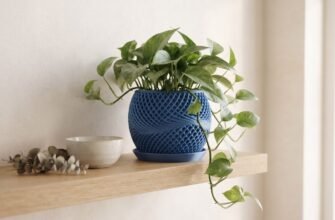
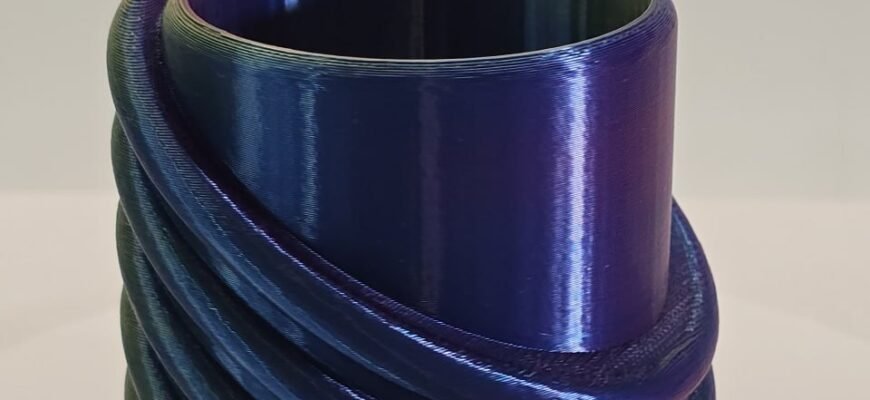
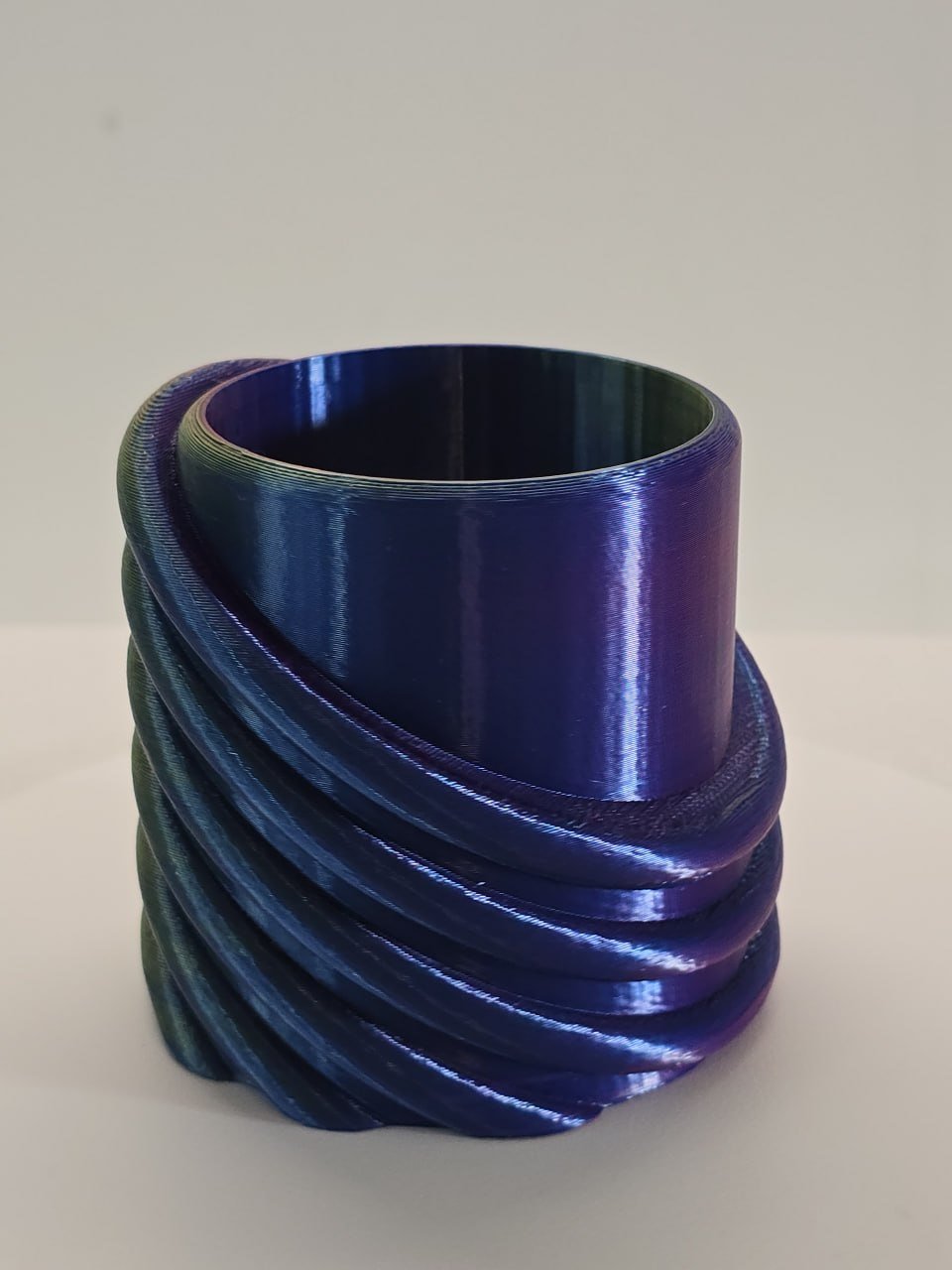
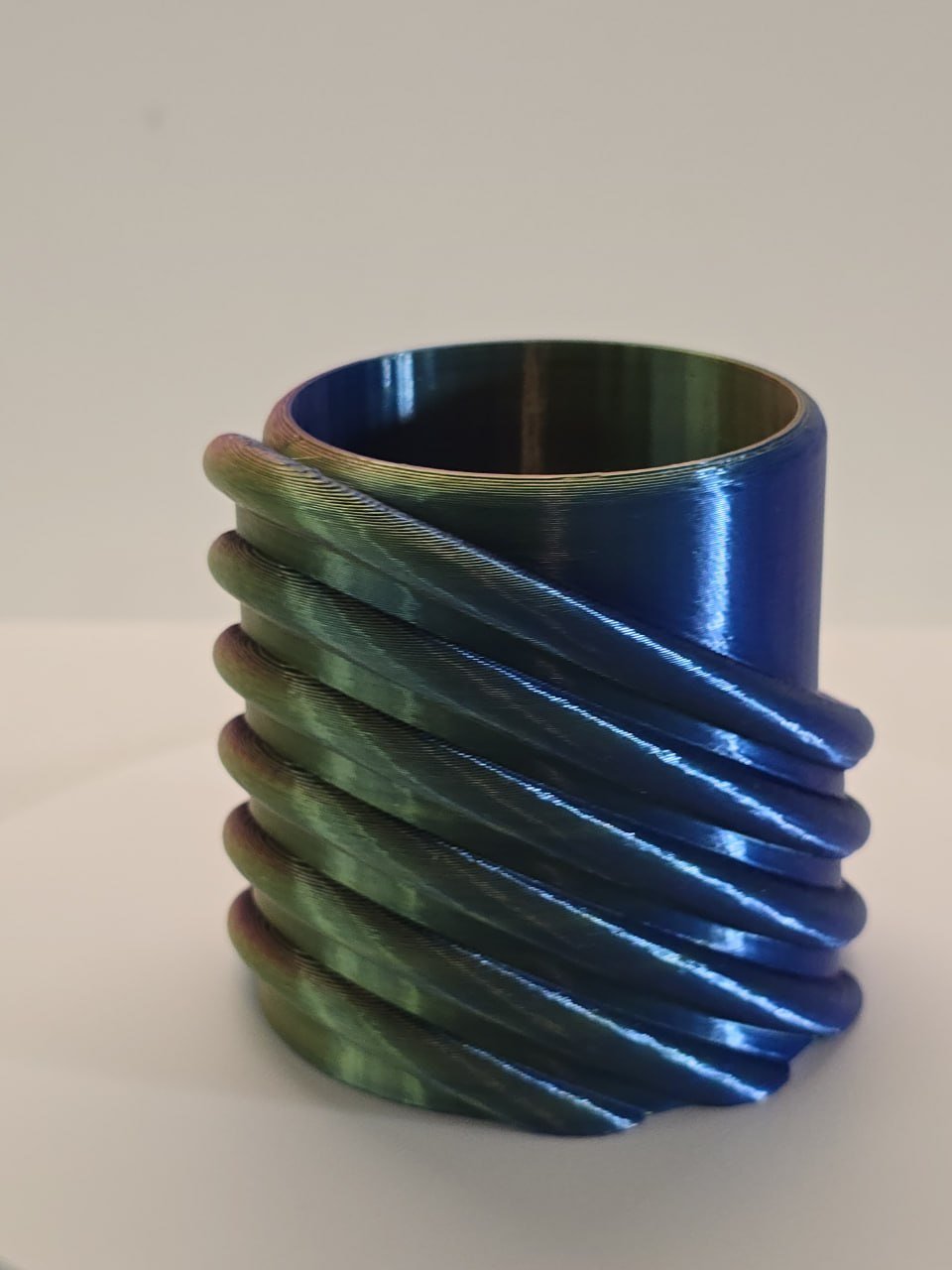
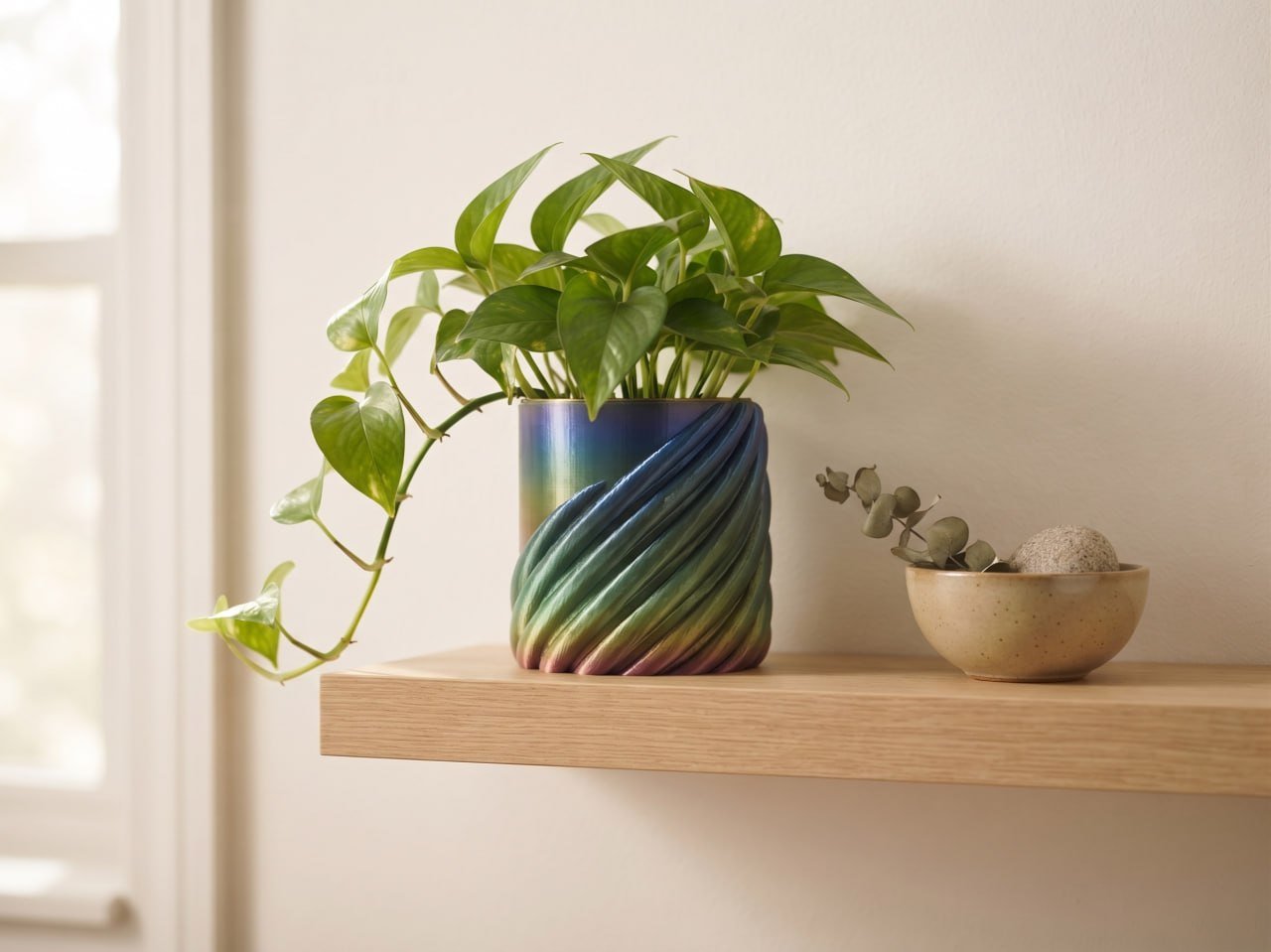
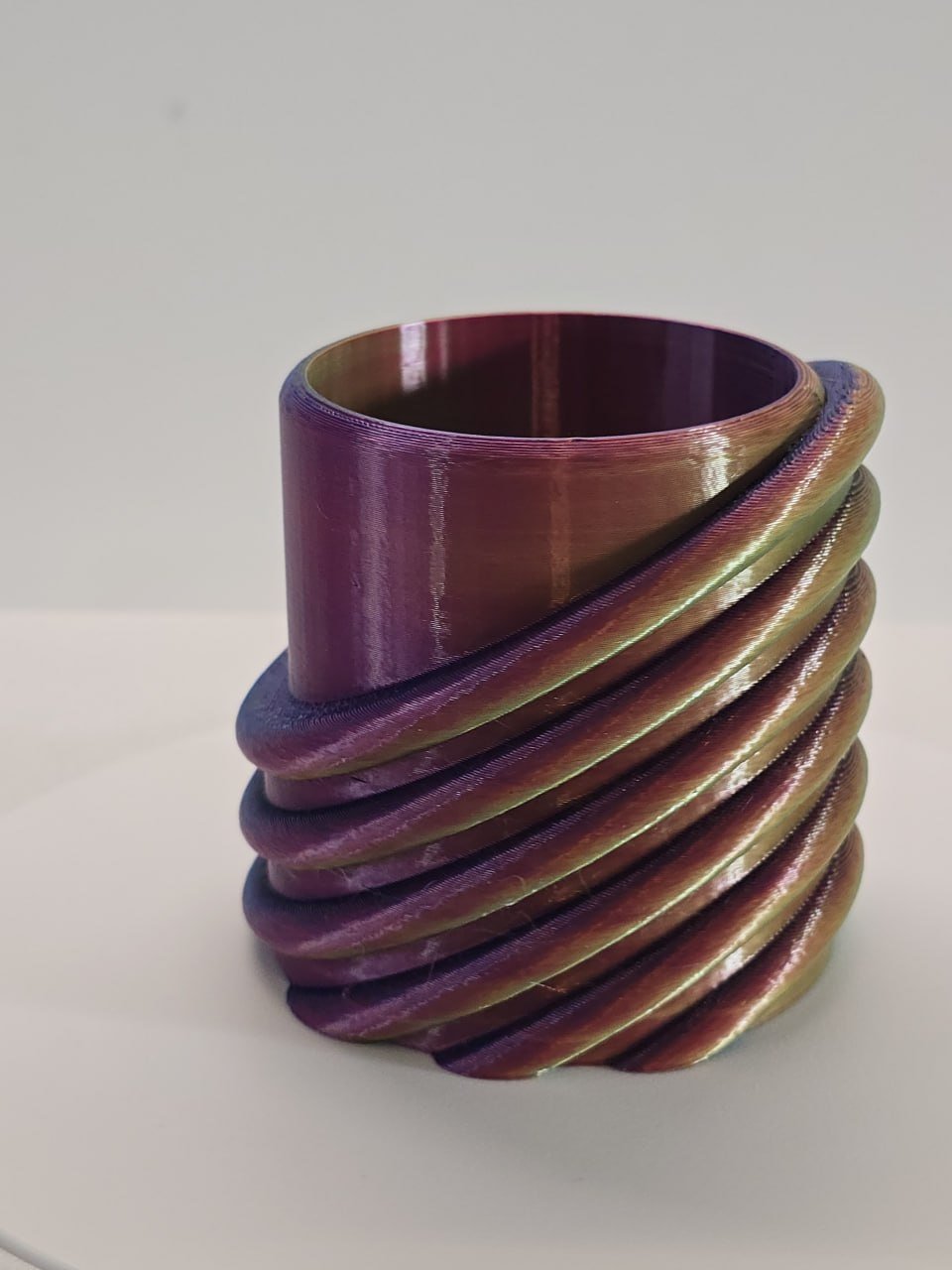
The featured portfolio piece is accurately described as a glossy blue spiral cylindrical holder or pen holder. Its exterior uses a continuous twisting form that gives a straightforward cylinder more movement and visual depth. The inside remains practical and cylindrical, while the outside reads as a compact sculptural object suitable for a contemporary desk, shelf, or entry console.
This photographed piece is not presented as a confirmed waterproof planter. It is best suited as a custom 3D printed pen holder, desk-accessory container, holder for artificial stems, or decorative display object. That distinction matters: visual similarity does not automatically mean that a container is engineered for repeated watering, wet soil, or standing water.
As a design example, however, the blue holder shows how Custom3Dmodel can develop a related 3D printed spiral planter, organizer, or decorative vessel. The same visual language can be scaled taller for a shelf planter, widened for a desktop plant pot, or adjusted with a larger opening for stationery. Before production, we review the specific geometry instead of assuming that one attractive version will perform equally well in every application.
Portfolio Gallery: Spiral Holder and Planter Variations
For a complete portfolio presentation, include original photographs of the glossy blue holder from front, side, rear, base, and top/interior angles. A scale-reference image helps viewers judge its visual presence, while in-use photos should show the item holding pens and displayed as a decorative object. Clearly label it as a spiral cylindrical holder/pen holder rather than a water-holding planter.
Additional concept or verified production images can show variations in color, height, opening diameter, layer texture, and use case. Suggested captions include: “Glossy blue spiral pen holder for modern desk organization” and “Custom spiral holder concept for 3D printed home decor in Miami.” Planter variations should be identified as customizable concepts unless their production details are confirmed.
Custom 3D Printed Planters Miami: From Decorative Vessel to Functional Plant Container
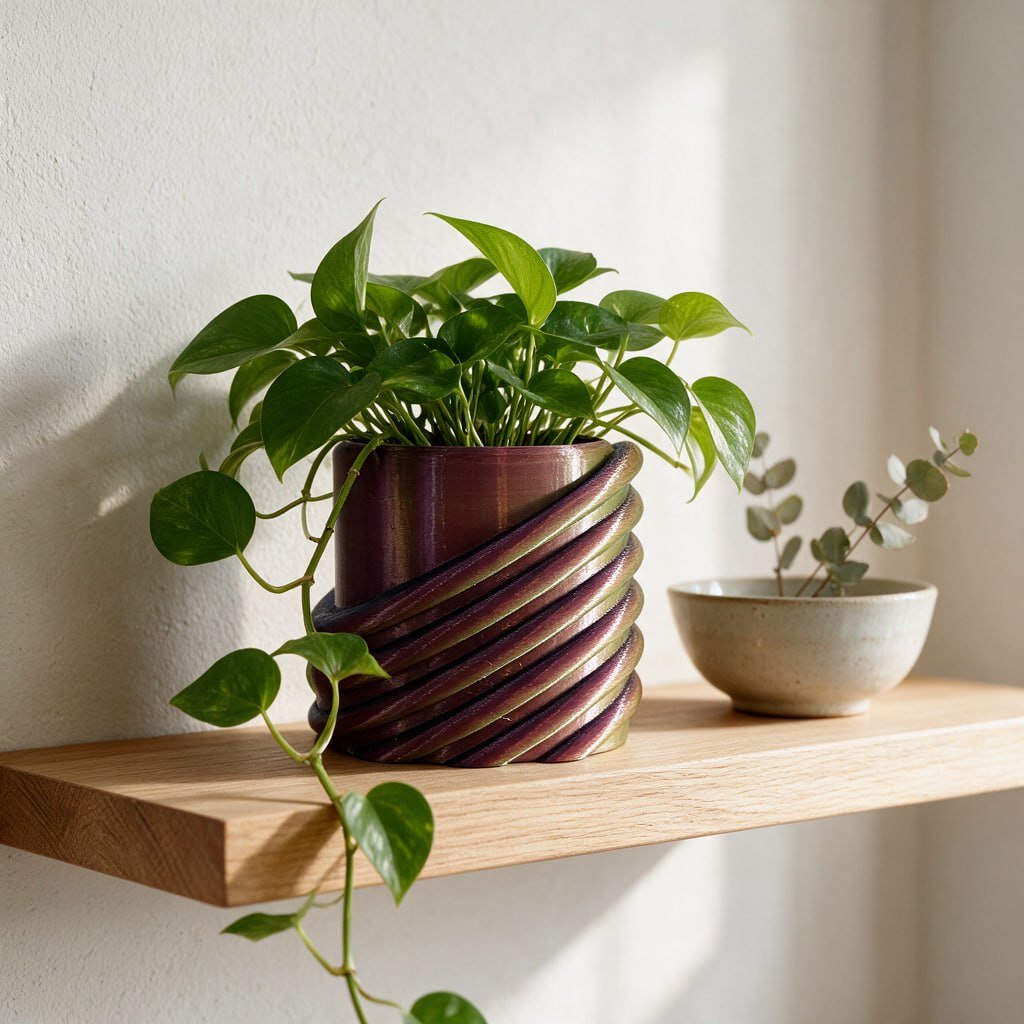
When evaluating custom 3D printed planters Miami clients should first decide whether they need a decorative outer vessel or a functional container for direct planting. A decorative vessel may simply hide a standard nursery pot. This is often the cleanest option for indoor displays because the nursery pot handles soil and drainage while the printed spiral shell supplies the custom appearance.
A functional 3D printed plant pot requires more engineering. Customization can include the outer spiral profile, interior opening, total height, base footprint, wall thickness, finish, drainage-hole location, and a matching drip tray or removable liner. For a small desk succulent, the internal cavity may be relatively shallow. For a larger houseplant, the design must account for the actual nursery-pot diameter, root space, wet soil weight, and the stability of a taller form.
In Miami apartments and South Florida homes, these containers can work well on shelves, desks, entry consoles, indoor plant displays, and covered patio areas when the material and moisture plan suit the environment. Direct sun, heat, wind, and regular rainfall are very different conditions from an air-conditioned office shelf. Share the plant type or target pot size with Custom3Dmodel so interior fit, wall structure, and support strategy can be planned around the real use case.
Planter Functionality: Drainage, Water Resistance, and Stability
Standard FDM prints are not automatically watertight. Even when a print looks solid, microscopic paths can exist between extruded layers or around seams. For that reason, a decorative container should not be advertised as waterproof by default, and a direct-planting design should be evaluated specifically for water-management needs.
Practical options include placing a removable nursery pot inside the printed container, adding drainage holes with a separate drip tray, using a fitted liner, or discussing a tested internal sealant or coating. The best route depends on whether the piece will receive occasional drips, regular watering, or prolonged standing water. Material choice alone is not a complete waterproofing solution.
Stability is equally important. A tall spiral shape can concentrate visual mass higher on the container than a plain straight-sided pot. A broader base, adequate wall thickness, correctly sized interior cavity, and, where appropriate, added base mass help reduce flexing and tipping. Contact Custom3Dmodel for fit-for-purpose recommendations when a design will hold water, support heavy soil, or be exposed to outdoor conditions.
FDM Design Expertise for a Clean, Stable Spiral Print
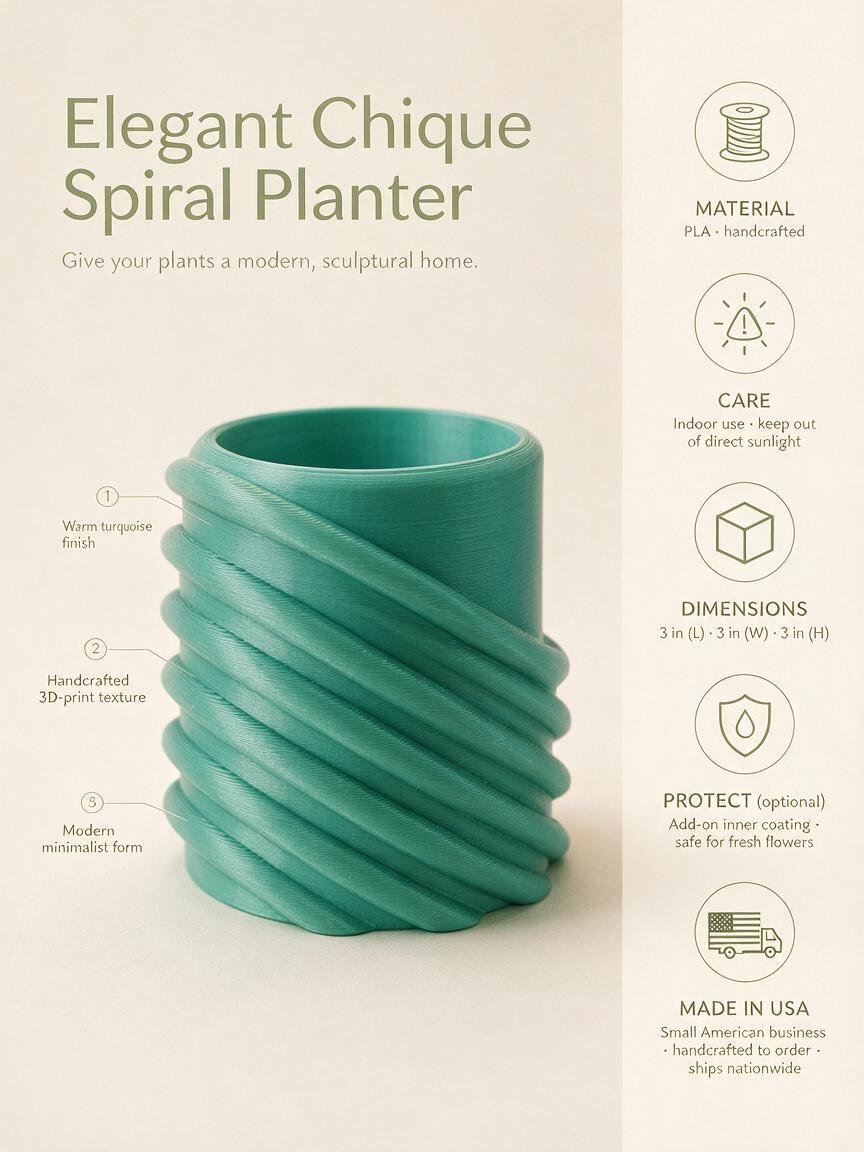
A successful spiral design 3D print depends on more than making a twisting shape in CAD. FDM printing builds the form layer by layer, so the direction of the layers, the angle of each helical feature, and the relationship between the outer ribs and interior wall all influence surface quality and structural behavior.
Containers are often evaluated for upright printing because that orientation naturally builds the base first, keeps the interior accessible, and avoids filling the cavity with difficult-to-remove supports. However, the exact spiral geometry determines whether upright orientation is appropriate. If a twist projects too far outward from the layer below, it can become an overhang that needs design adjustment or carefully placed support.
Base adhesion and the first layers deserve close attention. A tall twisting container has more leverage than a short, straight cylinder, so minor warping at the bottom can affect vertical alignment and stability. Custom3Dmodel reviews the footprint, early-layer contact area, wall transitions, and visual balance before recommending production settings.
Wall thickness also needs to fit the product. A thin decorative shell may be sufficient for artificial stems or light desk items, while a functional container needs more resistance to handling and the forces created by a fitted pot. Prototype iterations are valuable because they reveal whether the interior clears the intended pot, whether pens sit at a useful depth, whether the base feels stable, and whether the spiral reads cleanly at the selected scale.
Why Print Orientation and Support Strategy Matter
There is no universal print orientation or support setting for every spiral holder. Upright printing is commonly considered for containers, but the right choice depends on the model’s helical angles, desired exterior finish, interior requirements, and material. Orientation changes where layer lines appear and how forces travel through the base and walls.
Supports can prevent unsupported spiral sections from drooping, but they can also leave marks and increase post-processing. On a display-focused piece, support placement should protect difficult geometry while minimizing contact on the most visible exterior ridges. Interior supports are also a concern because removal access may be limited inside a narrow opening. Custom3Dmodel reviews the actual model before proposing a production approach.
PLA, PETG, and ABS for Custom Spiral Planters and Holders
For most indoor decorative holders and display-first custom 3D printed planters Miami projects, PLA is a practical starting point. It can provide crisp detail on the spiral and works well for dry-use pen holders, ornamental vessels, and indoor planters that use a removable nursery pot. PLA is not the preferred choice where prolonged moisture, high heat, or harsh outdoor exposure is expected.
PETG is commonly considered when improved moisture resistance and impact resistance matter. It can be a better fit for a plant-related design that uses a liner, drip tray, or carefully planned direct-planting arrangement. PETG still requires sensible drainage and water-management decisions; it should not be treated as an automatic guarantee of a watertight FDM container.
ABS can be relevant for certain projects where its material characteristics or finishing potential suit the brief, but it comes with more demanding print conditions and a greater tendency to warp during production. It may also require additional finishing work to achieve the desired appearance. For a modern indoor decorative piece, ABS is not automatically the best choice simply because it is a familiar engineering plastic. Custom3Dmodel recommends material based on the container’s environment, function, finish goal, and geometry.
Color, Texture, and Glossy Finish Options
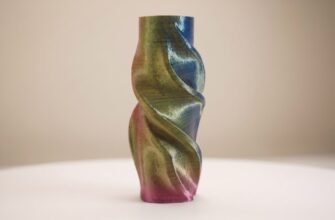
The glossy blue portfolio holder provides a useful visual reference, but final color and surface appearance depend on the chosen material, geometry, print settings, and any approved post-processing approach. A spiral surface naturally catches light differently across each twist, making solid colors, subtle gradients, and restrained texture particularly effective.
Options may include bold solid colors, design-appropriate multicolor effects, a matte surface, a polished-looking finish, or intentionally visible layer texture that emphasizes the additive-manufacturing process. Sanding, smoothing, polishing, or coating may be appropriate for some materials and desired looks, but should be confirmed during quoting. Room photos, paint swatches, and inspiration images help align a custom decorative 3D print with Miami office or home decor.
Custom3Dmodel’s Design-to-Production Workflow
Custom3Dmodel works as a design-to-production partner. Start by sending an idea, photo, sketch, existing 3D file, inspiration image, or simple dimensions. We then review printability, the interior opening, base proportions, spiral overhangs, material choices, and whether the piece is intended as a dry-use holder or a plant-ready variation.
After receiving feedback, you can approve the design direction, color, finish, and functional features such as a liner clearance, drainage holes, or drip-tray interface. A prototype is often the sensible next step for custom product design Miami clients want to evaluate in person or compare against a target pot. It can validate the appearance, pen capacity, plant-pot fit, stability, and any water-management details before multiple units are produced.
Once the design is proven, Custom3Dmodel can proceed with FDM production for a one-off item or a coordinated set. Learn more about our custom 3D printing and product development services when you need support beyond an existing printable file.
What to Send for an Accurate Custom Planter or Holder Quote
For an accurate quote, provide your preferred height and width, exterior shape, interior opening diameter, and either the target nursery-pot size or estimated pen and accessory capacity. Include the drainage preference, intended environment, expected water exposure, color, finish, preferred material if known, and required quantity.
A sketch, reference image, existing 3D file, or dimensions of an object that must fit inside the container are all useful. These details let Custom3Dmodel recommend whether PLA, PETG, a removable liner, a drip tray, or a prototype should be part of the project. You can also use our tool for getting an instant 3D printing quote when you already have a ready-to-print model.
Custom3Dmodel Experience: Practical FDM Guidance for Decorative Containers
Custom3Dmodel evaluates decorative containers through a manufacturing lens: where spiral overhangs need support, how layer orientation affects visible surfaces, whether the base has enough adhesion area, how wall thickness changes rigidity, and how support removal may affect a polished exterior. These are the practical decisions that separate a compelling render from a reliable physical product.
Portfolio labeling matters as well. The photographed blue object is a spiral cylindrical holder/pen holder. A planter is a customizable variant that requires a use-case review for moisture, drainage, plant weight, and indoor or outdoor conditions. We avoid blanket promises about waterproofing, capacity, long-term outdoor durability, pricing, or production timing when those details depend on the actual design.
For the strongest project documentation, add original project photography, process images, material samples, and verified specifications only when available. This transparent approach gives customers a clearer basis for choosing a 3D printing service Miami designers, homeowners, and businesses can rely on for practical recommendations.
Small-Batch 3D Printing for Gifts, Offices, and Interior Projects
A proven spiral container design can become a consistent collection without becoming repetitive. Small batch 3D printing Miami projects may include coordinated desk organizers, branded office accessories, housewarming gifts, event decor, interior-design accents, or matching planter sets. Height, color, opening size, texture, and intended use can vary while the twisting silhouette keeps the collection visually connected.
Rapid prototyping Miami clients often use before a small run is especially useful when one design must serve several roles, such as a pen holder for office desks and an outer pot for a retail display. Rather than assuming a minimum order quantity or production schedule, Custom3Dmodel can review your quantity, design variations, and finish expectations to recommend a sensible production path.
Frequently Asked Questions About Miami 3D Printed Planters and Spiral Holders
These expert-reviewed answers address the practical questions customers ask when comparing custom planter printing and decorative-container options. The key distinction is whether the item is a dry-use holder or a container designed for live plants, soil, watering, and drainage.
Can you make a custom spiral planter from my photo or sketch?
Yes. Custom3Dmodel can review a photo, sketch, concept, dimensions, or reference object and help develop a printable spiral planter or holder. The final model should be checked for interior space, base stability, wall thickness, overhang behavior, and its intended use before production.
Is PLA or PETG better for a 3D printed planter?
PLA is often suitable for indoor decorative applications and dry-use holders. PETG is commonly preferred when improved moisture and impact resistance are important. Neither material alone makes an FDM planter watertight, so drainage, liners, coatings, and actual use conditions still need to be considered.
Are 3D printed planters waterproof?
Standard FDM planters are not automatically waterproof. Practical plant-ready options include a removable nursery pot, drainage holes with a drip tray, a liner, or a tested internal coating selected after discussing the project requirements with Custom3Dmodel.
Can a spiral design be used as a custom pen holder instead?
Absolutely. The glossy blue portfolio item is best described as a spiral cylindrical holder or pen holder. A dry-use desk organizer can use different interior dimensions and does not need the drainage and moisture-management features required for a live-plant container.
Can I order different colors or a small batch in Miami?
Color, finish, dimensions, and quantity can all be discussed for a custom order or small batch. Send your desired quantity, inspiration images, and use case to receive material guidance and a quote tailored to your Miami project.
Request a Quote for Custom 3D Printed Planters Miami
Request a custom quote from Custom3Dmodel for a spiral planter, pen holder, or decorative cylindrical container designed around your space and use case. Upload a reference image or sketch, ask for PLA versus PETG guidance, or request a prototype and small-batch production consultation.
To begin, send your preferred dimensions, interior opening, plant-pot fit or pen capacity, drainage needs, color, finish, environment, reference file or image, and quantity. We welcome inquiries from Miami and South Florida clients, as well as customers across the U.S. who would like to discuss available nationwide shipping options. For direct planting, outdoor exposure, or water-holding needs, ask Custom3Dmodel for a fit-for-purpose recommendation before production.
Custom 3D Printed Planter Options in Miami
| Planter Style | Recommended Size | Best Plant Type | Spiral Design Detail | Ideal Miami Use | Recommended Material |
|---|---|---|---|---|---|
| Mini desk planter | 3–4 in. diameter | Succulents and air plants | Fine, subtle spiral texture | Home office desks and apartment shelves | PLA |
| Windowsill herb planter | 4–5 in. diameter | Basil, mint, oregano, and chives | Medium spiral with drainage slots | Kitchen windows and bright indoor areas | PETG |
| Modern tabletop planter | 5–6 in. diameter | Pothos, philodendron, and peperomia | Deep geometric spiral ribs | Coffee tables, consoles, and reception areas | PLA or PETG |
| Statement floor planter | 8–12 in. diameter | Snake plants, palms, and large foliage plants | Bold wide-pitch spiral | Living rooms, lobbies, and staged properties | PETG |
| Custom logo planter | 4–7 in. diameter | Low-maintenance indoor plants | Spiral body with embossed logo panel | Miami businesses, client gifts, and events | PLA |
| Cachepot with removable liner | 6–8 in. diameter | Nursery-pot plants and orchids | Clean continuous spiral exterior | Decorative indoor displays with easy watering | PLA or PETG |
Resources & Useful Links
- 📚 Fused Filament Fabrication (FFF) — Background on the extrusion-based 3D-printing process commonly called FDM, relevant to producing custom spiral planters and decorative cylindrical containers.
- 🎓 Ultimaker Cura Documentation — Technical documentation for Cura’s slicing engine, useful for understanding settings such as wall thickness, infill, layer height, and print orientation for functional containers.
- 🎓 Prusa Knowledge Base — Printer and material guidance from a major FDM ecosystem, including practical resources on PLA, PETG, ABS, bed adhesion, and improving print quality.
- 🏢 NatureWorks Ingeo PLA Biopolymer — Official information on Ingeo PLA, a widely used 3D-printing biopolymer suitable for many indoor decorative planters, organizers, and display containers.