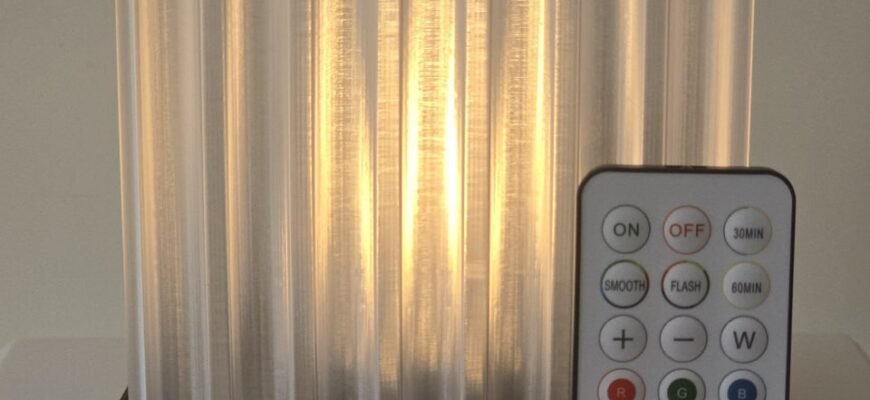
- custom 3D printed lamp Miami: Modern LED Table Lamps, Translucent Shades & Small-Batch Production
- Custom Decorative LED Lighting for Miami Homes, Offices, and Interior Projects
- A Modern 3D Printed Table Lamp Designed Around Light and Form
- Portfolio Visuals: Corrugated Shade, Ambient Glow, and Remote-Controlled Color
- Custom 3D Printed Lamp Miami Design and Production Workflow
- From Inspiration to 3D Model
- Prototype the Lighting Effect Before a Small Batch
- Materials for a Translucent 3D Printed Lampshade and Stable Base
- How Wall Thickness and Ribbed Geometry Affect Light Diffusion
- Engineering a Functional Custom LED Lamp Housing
- FDM vs. SLA for 3D Printed Decorative Lighting
- Custom Options for 3D Printed Lamps and Lampshades
- For Interior Designers, Hospitality Concepts, Makers, and Product Entrepreneurs
- Why Work With Custom3Dmodel for a Miami Decorative Lighting Project
- Frequently Asked Questions About Custom 3D Printed Lamps in Miami
- Can You 3D Print a Custom Ribbed or Pleated Lampshade?
- Is PLA or PETG Better for a Translucent LED Lamp Shade?
- Can a Custom Lamp Base Include Space for LEDs, Wires, and a Remote?
- Do I Need a Prototype Before Ordering Small-Batch 3D Printed Lamps?
- Request a Custom 3D Printed Lamp Quote in Miami, Florida
- Custom 3D Printed Lamp Options for Miami Homes and Offices
- Resources & Useful Links
custom 3D printed lamp Miami: Modern LED Table Lamps, Translucent Shades & Small-Batch Production
A custom 3D printed lamp Miami project can turn a reference image, rough sketch, or product concept into a contemporary LED table lamp with a ribbed translucent shade, stable base, and component-aware housing. Custom3Dmodel works with Miami, Florida clients on custom lampshades, decorative light housings, prototypes, and small production runs. Final dimensions, mounting details, electrical-component requirements, and light-source specifications are reviewed during the design process rather than assumed from a concept image.
Custom Decorative LED Lighting for Miami Homes, Offices, and Interior Projects
A custom 3D printed lamp Miami clients develop for a condo, office, hospitality concept, or staged interior has a different purpose than an off-the-shelf fixture. It may need to match a color palette, fit a narrow console, complement branded décor, or create a controlled warm glow without exposing individual LEDs. For Miami-Dade homeowners, decorators, interior designers, and product creators, that flexibility is often the reason to make the lamp rather than simply buy one.
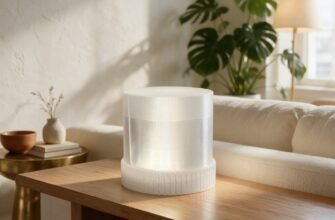
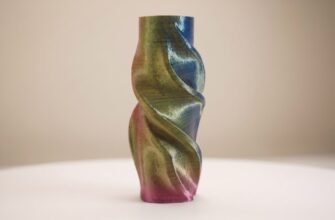
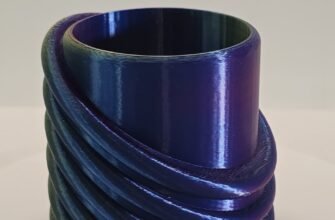
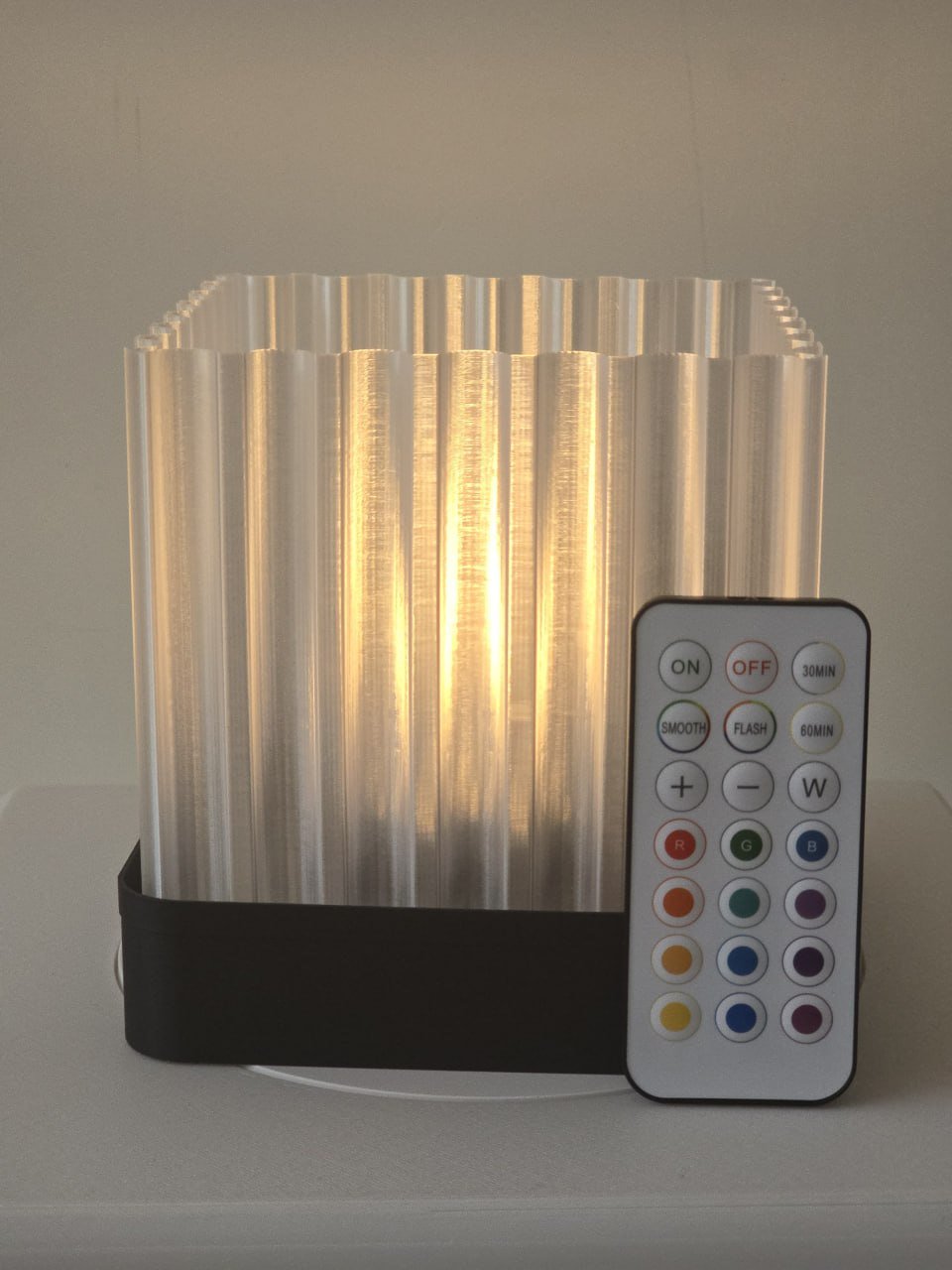
A corrugated or pleated diffuser changes the behavior of light as well as the appearance of the object. The ribs interrupt direct sight lines to the LED source, scatter illumination around the cylinder, and create texture when the lamp is switched off. When illuminated, the same geometry can create a softer, more even ambient effect than a plain clear shell.
Custom3Dmodel is a hands-on partner for modeling, FDM and SLA printing, prototype evaluation, and small-batch production. We do not position a printed decorative part as a pre-certified electrical fixture; instead, we design printed elements around the approved low-heat LED kit, controls, hardware, and intended indoor environment.
A Modern 3D Printed Table Lamp Designed Around Light and Form
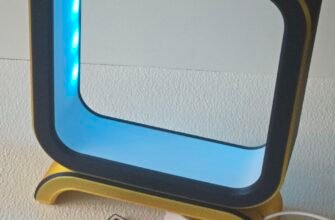
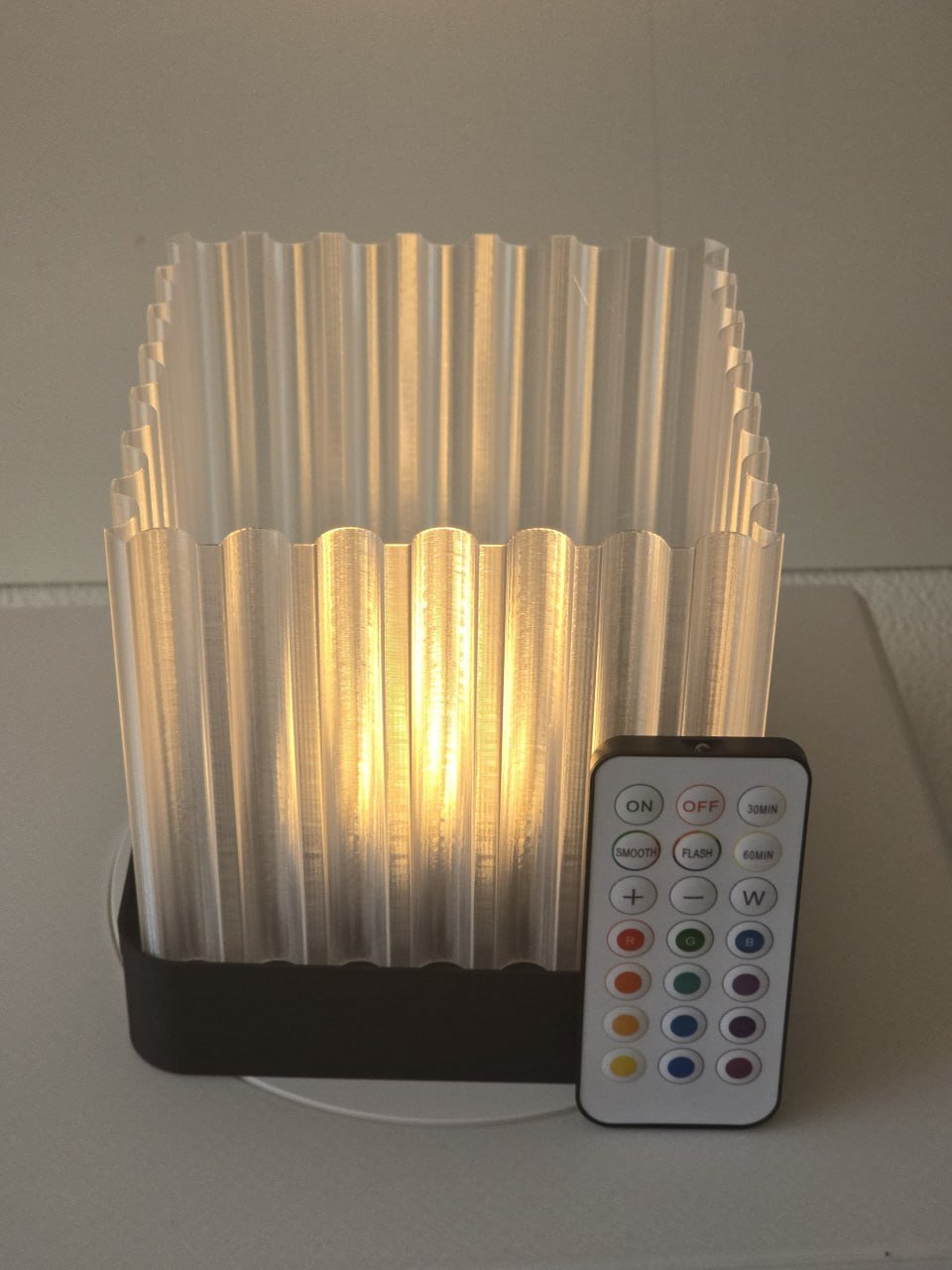
A well-resolved 3D printed table lamp starts with a clear relationship between the shade, light source, and base. A popular direction is a vertically ribbed, pleated, or corrugated translucent cylinder over internal LED illumination, paired with a clean square base that provides visual contrast and a stable footprint. The base can also be planned around supplied connectors, switches, battery access, or remote-control needs.
This modern 3D printed lamp design is not limited to a single profile. A shade may be smooth, wavy, tapered, cylindrical, tightly pleated, or deeply corrugated. Customers can specify approximate height and diameter, rib density, wall thickness, opacity, base color, finish level, and whether the lamp should produce a bright diffused glow or a more subdued accent light. Those choices affect both the visual result and the print strategy.
For example, deeper ribs can give a custom decorative light fixture more stiffness while casting stronger linear highlights. Shallower ribs may look more refined but often need careful tuning of wall thickness and LED distance. This is why 3D printed decorative lighting is developed as an illuminated object, not just a decorative print viewed under room light.
Portfolio Visuals: Corrugated Shade, Ambient Glow, and Remote-Controlled Color
For documented projects, original photography should show the lamp switched off, illuminated at low and high brightness, and displayed in verified color settings when a color-changing LED system is used. Useful close-ups include the ribbed diffuser, shade-to-base connection, square base, cable exit, and any remote-control storage detail.
Recommended alt text includes: “custom 3D printed lamp Miami with translucent ribbed LED lampshade” and “3D printed pleated lamp shade glowing with ambient LED light in Miami, Florida.” Room-setting images can place a verified project in a Miami apartment, home office, or hospitality-inspired interior without making unverified installation or performance claims.

Custom 3D Printed Lamp Miami Design and Production Workflow
Every custom 3D printed lamp Miami project begins with usable inputs: a sketch, inspiration photo, existing CAD file, physical measurements, or a description of the lighting effect you want. Include the intended location, approximate shade size, preferred profile, expected quantity, and information on any LED kit, remote, USB charging component, or power hardware that needs space in the design.
Custom3Dmodel can create or revise the digital model, with attention to printable rib spacing, shade thickness, base proportions, attachment features, and component cavities. Where a lamp needs to accommodate customer-supplied parts, dimensions and access requirements should be confirmed before the model is finalized. Explore our custom 3D printing and modeling services for support ranging from concept development through functional prototype production.
A prototype is then useful for checking visual fit, shade assembly, base stability, and the actual lighting result. After review, the design can be refined and prepared for small-batch production. Miami and Miami-Dade customers may benefit from closer collaboration for consultations and prototype review, with pickup or delivery options discussed where available. Project scope, materials, finish requirements, production quantity, and schedules are confirmed before manufacturing.
From Inspiration to 3D Model
Bring reference photos, a hand sketch, an existing lamp to measure, or a CAD file that needs manufacturability review. Interior designers may provide finish boards and room dimensions; entrepreneurs may provide LED-kit specifications, target pricing, and expected batch size. We translate those inputs into a model that considers diffuser geometry, the LED cavity, wire paths, control access, and a coherent base-to-shade proportion.
Printability matters early. Extremely thin pleats can distort, while unsupported internal features may require design changes. Modeling for production means making the object look intentional while allowing it to be assembled, repeated, and inspected consistently.
Prototype the Lighting Effect Before a Small Batch
A digital render cannot fully predict illuminated material. Wall thickness, pigment, rib spacing, LED orientation, and internal reflections all affect whether the final shade hides hot spots or shows distinct LED points. A prototype lets the client assess brightness, color diffusion, stability, control access, and the decorative effect in the intended room conditions.
Prototype timing and iteration count depend on geometry, finishing, material availability, and project requirements. For a collection or hospitality concept, sample diffuser sections can be a practical first step before producing a full-size lamp.

Materials for a Translucent 3D Printed Lampshade and Stable Base
For a custom 3D printed lamp Miami customers intend for indoor ambient use, translucent PLA is often a strong starting point. It prints predictably in FDM, accepts intentional layer texture well, and can produce an attractive soft glow through a ribbed cylinder. Its suitability depends on the final environment and use with low-heat LED components; PLA is not the default choice for a shade exposed to excessive heat or demanding outdoor conditions.
Translucent PETG may be a better fit when the project benefits from additional toughness and greater heat resistance than PLA. It can work well for a translucent 3D printed lamp, but “translucent” does not automatically mean optically clear. Pigment, nozzle settings, layer bonding, wall count, and part geometry all influence the final light transmission and surface appearance. PETG can also show a glossier, more variable finish that should be assessed with a sample when visual consistency is important.
Translucent resin made through SLA can be considered for smaller, highly detailed parts or projects that prioritize a smoother finish. It requires different post-processing, has different scale and durability considerations, and is not automatically the best option for a large diffuser. For the opaque base, PETG, ABS, or another project-appropriate material may be selected based on required stiffness, finish, component support, and intended use.
How Wall Thickness and Ribbed Geometry Affect Light Diffusion
Thicker shade walls generally reduce light transmission and make the glow more subdued; thinner walls can brighten the effect but may need extra structural support at larger diameters. Vertical ribs, corrugations, and pleats add stiffness while scattering light and helping conceal individual LED points. A 3D printed ribbed lampshade can therefore function as both a visual pattern and a practical diffuser.
Diffusion also depends on LED distance from the shade, LED orientation, shade diameter, pigment, layer texture, and the internal surface. A light source placed too close to a thin wall can still create hot spots, regardless of material. For color-sensitive interiors or product launches, Custom3Dmodel recommends testing a material section or scaled shade before committing to the full geometry.

Engineering a Functional Custom LED Lamp Housing
A custom LED lamp housing needs more planning than an empty decorative base. The design should account for LED clearance, wire-routing paths, connectors, strain-relief considerations where appropriate, access to switches or charging components, and a secure shade-to-base attachment. A removable shade, twist-lock feature, threaded interface, or fastened connection may be appropriate depending on the lamp scale and how often access is needed.
Stability is equally important. The base footprint, center of gravity, wall construction, internal component placement, and fastening arrangement should match the height and diameter of the shade. A tall lightweight diffuser on a small base may look clean in a render but be impractical on a desk or side table. Remote-control functionality can be accommodated with a recessed storage location, dedicated enclosure, or cavity sized around customer-supplied component dimensions.
Printed shades and housings should be paired with low-heat LED components. Electrical assemblies must follow applicable manufacturer instructions and should be completed or reviewed by qualified electrical professionals when required. Custom3Dmodel’s role is to create the printed form, fit features, and component accommodations identified during design review.
FDM vs. SLA for 3D Printed Decorative Lighting
FDM is often well suited to larger ribbed, pleated, and cylindrical shades because it efficiently produces tall decorative forms and can make layer texture part of the design language. It is particularly effective when a 3D printed light diffuser is meant to have visible linear texture rather than a perfectly smooth molded appearance.
SLA is useful for smaller, detailed, smooth-finish components or prototype elements where crisp surface detail is the priority. The choice between FDM and SLA should follow the part size, pattern complexity, translucency goal, budget, fit requirements, finishing expectations, and batch quantity. This material-and-process evaluation is central to rapid prototyping lighting products Miami clients bring to Custom3Dmodel.

Custom Options for 3D Printed Lamps and Lampshades
Custom lampshade 3D printing Miami projects can include ribbed, corrugated, wavy, pleated, smooth, tapered, or cylindrical profiles. Other meaningful variables include shade height, diameter, wall thickness, translucency level, base color, surface finish, pattern density, and the dimensions of the interior LED cavity. These are not cosmetic decisions alone: a denser pleat pattern changes rigidity and diffusion, while a wider cylinder changes how far the LEDs sit from the shade.
Functional options may include cable-routing channels, access panels, removable shades, screw-on or twist-lock connections where appropriate, a custom base footprint, and remote-control storage. Whether you need a one-off custom decorative light fixture, showroom sample, or small batch 3D printed lamps Miami design businesses can evaluate, the model should be created with repeatability in mind.
For 3D printed home decor Miami projects, a coordinated base color and diffuser tone can help a lamp fit an existing interior palette. Request an instant 3D printing quote with photos, dimensions, CAD files, and component information to begin a practical manufacturing review.

For Interior Designers, Hospitality Concepts, Makers, and Product Entrepreneurs
A custom 3D printed lamp Miami concept can serve a Miami condo, home office, staged interior, retail display, decorative product line, or ambient-lighting prototype. Interior professionals can use custom dimensions, coordinated colors, and a distinct diffuser pattern to align lighting with a broader spatial or brand direction. A ribbed cylinder may support a coastal-modern aesthetic, while tighter pleats can create a more architectural look.
Makers and product entrepreneurs use prototypes to validate appearance under illumination, component fit, assembly sequence, manufacturability, and customer response before investing in production. Not every geometry or material is appropriate for every setting. Intended indoor use, selected light source, required durability, size, and desired finish should guide the final design.
Why Work With Custom3Dmodel for a Miami Decorative Lighting Project
Custom3Dmodel approaches decorative lighting as a connected design-and-manufacturing problem: diffuser performance, print method, shade fit, base stability, component space, surface finish, and production repeatability all influence the result. Our work combines custom 3D modeling, FDM and SLA printing, lampshade experimentation, component-aware housing design, prototype development, and small-batch production support.
When available and verified, useful project evidence includes original illuminated lamp photos, material swatches, CAD previews, diffuser comparisons, production-process visuals, and measured specifications. We only publish confirmed dimensions, layer heights, wall thicknesses, finish results, quantities, and production details for documented projects. That discipline is especially important for lighting concepts, where small geometry changes can substantially affect the glow.
Frequently Asked Questions About Custom 3D Printed Lamps in Miami
The answers below describe the custom design and printing process. Electrical specifications, component compatibility, and required safety review are finalized for each project.
Can You 3D Print a Custom Ribbed or Pleated Lampshade?
Yes. Custom3Dmodel can model ribbed, wavy, corrugated, pleated, and cylindrical lampshade profiles from a sketch, photo, CAD file, or physical dimensions. Before production, we review printable geometry, structural needs, intended translucency, shade attachment, and the lighting concept.
Is PLA or PETG Better for a Translucent LED Lamp Shade?
Neither is universally better. Translucent PLA is often attractive for low-heat indoor LED shades with an intentional FDM texture, while PETG may be useful when greater toughness and heat resistance are needed. Wall thickness, pigment, print settings, lamp geometry, and desired diffusion matter as much as the material name. A sample or prototype helps verify the illuminated result.
Can a Custom Lamp Base Include Space for LEDs, Wires, and a Remote?
Yes. A base can be designed around supplied dimensions for LEDs, wires, connectors, switches, charging components, and remote storage or enclosure features. The exact cavity layout depends on the actual components and access requirements. Electrical installation must follow component instructions and qualified professional guidance where required.
Do I Need a Prototype Before Ordering Small-Batch 3D Printed Lamps?
A prototype is strongly recommended when diffuser behavior, illuminated appearance, component fit, assembly, and repeatable production matter. It provides a chance to evaluate hot spots, stability, control access, and finish before ordering a small batch. Scope and scheduling are quoted after review of complexity, material, finish, and quantity.
Request a Custom 3D Printed Lamp Quote in Miami, Florida
Bring Custom3Dmodel a sketch, reference image, CAD file, LED-kit information, physical dimensions, or an existing object to measure. Tell us the intended use, shade pattern, approximate size, material preferences, remote-control needs, finish expectations, and quantity. We serve Miami, Florida and Miami-Dade projects, with nationwide shipping available for eligible printed parts and projects. Request your custom lamp quote from Custom3Dmodel and turn your decorative lighting concept into a prototype or production-ready 3D printed design.
Custom 3D Printed Lamp Options for Miami Homes and Offices
| Lamp Style | Best Setting | Recommended Material | Typical Size | Lighting & Control Features | Best 3D Printing Method |
|---|---|---|---|---|---|
| Geometric table lamp | Modern living rooms, bedside tables, apartments | Translucent PLA or PETG | 10–16 in. tall | Warm-white LED bulb; optional dimmable remote | FDM |
| Custom lithophane lamp | Personalized gifts, family photo décor, memorial displays | White translucent PLA | 4–8 in. wide | LED backlighting reveals photos; touch or remote-controlled base | FDM |
| Spiral or wave lampshade | Ambient bedroom, lounge, and hospitality lighting | Translucent PETG | 8–14 in. diameter | Diffused LED illumination; color-changing remote option | FDM |
| Miami skyline or palm-themed lamp | Miami-themed homes, vacation rentals, souvenir displays | PLA shade with PETG or ABS base | 12–18 in. tall | Soft ambient LED lighting; custom text or address can be added | FDM |
| Minimalist cylinder lamp | Desks, offices, reception areas, contemporary interiors | Translucent PLA or PETG cylinder; ABS base | 8–15 in. tall | Remote dimming, timer settings, or RGB LED module | FDM |
| Detailed sculptural light fixture | Statement décor, boutiques, restaurants, creative studios | Translucent resin or fine-detail PLA | 6–20 in., depending on installation | Integrated low-heat LED components; custom mounting points | SLA or FDM |
Resources & Useful Links
- 📚 Fused Deposition Modeling (FDM) — Wikipedia — Background on fused-filament 3D printing, a common process for producing custom PLA, PETG, and ABS lamp shades, bases, and light-fixture housings.
- 🏢 Formlabs: The Ultimate Guide to Stereolithography (SLA) 3D Printing — Official overview of SLA resin printing, useful for evaluating smooth translucent lamp components, detailed prototypes, and post-processing requirements.
- 🎓 Prusa Knowledge Base: Material Guide — Material-selection reference covering common printable plastics, including PLA and PETG, with practical considerations relevant to decorative lighting projects.
- 🏢 UltiMaker: 3D Printing Materials — Manufacturer resource for comparing engineering and general-purpose 3D-printing materials, including properties that affect translucency, strength, and heat resistance in lamp designs.